


WWO: Big Reach Creates Future Demand
This week’s blog post from Cumulus Media | Westwood One’s Audio Active Group looks at creating future demand via two recent publications: James Hurman’s Future Demand: How Marketing to Tomorrow’s Customers Will Break Your Brand Out of the Performance Trap and Les Binet’s and Will Davis’ study Go Big  or Go Home: How Small Thinking is Killing Advertising and What to Do About It. Both publications point to a number of conclusions that advertisers should be aware of: 1) Advertisers have two jobs: Convert existing demand by reaching the five percent who are in the market and create future demand via brand building focused on the 95% of consumers who are not in the market; 2) “Big media ads” (AM/FM radio, TV, and outdoor), are more effective at creating future demand because they create a greater sense of quality, popularity, and trust for brands; 3) Ads from “big media” (AM/FM radio, TV, and outdoor) stick in minds more than digital or social media ads. Over 85% of online ads don’t reach the 2.5 second Attention-Memory Threshold, according to Amplified Intelligence’s Karen Nelson-Field; 4) Don’t be afraid of “waste.” It’s the part of advertising that works. See full blog post here.
 paid ads among 182,500 TikTok users and connected that to in-market brand lift data. The study covered eight global markets and $71 million of media spend, which generated 23.6 billion impressions. The best practices revealed by the research include: 1) Host-read ads generate greater impact: System1 and WPP Media find creator ads (a.k.a. “host reads”) drive greater brand memory lift, which is the combination of brand awareness and ad recall; 2) Two best practices: Say the name of the advertiser within the first two seconds and ensure strong positive emotion via entertainment; 3) “Say it and show it”: Saying the brand and showing it in the first two seconds of the ad drives the strongest brand recognition; 4) Conduct a “brand early and often” creative audit: Watch/listen to all your ads. Check off if your brand is mentioned in the first two seconds and if there are at least five or more audio track brand mentions in 30-second ads; 5) Use both salesmanship and showmanship: Emotion-based creative that is funny and entertaining builds stronger brands and generates greater business outcomes; and 6) Utilize right brain elements such as characters with vitality, story unfolding, clear sense of place, sounds of the living, dialogue, word play, distinctive accents, and music with discernable melody.
  increase in ROI since COVID but a worrying 11% erosion in advertising driven profits; 2) ROI is mistaken for business outcomes such as sales growth, profit growth, and customer growth. ROI is none of those things. It is simply a ratio of revenue/profit generated by ad spend; 3) Surprisingly, ROI and revenue/profit growth move in the opposite direction. Low profit growth produces high ROI. Strong profit growth results in lower ROI; and 4) Perception vs. reality: Marketers mistakenly believe ROI trumps budget in driving profit growth. The reality is budget is 9 times more critical than ROI in generating profit.
 blend of breaking news, insightful commentary, and sharp analysis of the issues driving the national conversation.” The one-hour program is delivered Monday-Friday at 5:00 am ET. Westwood One president Collin Jones adds, “What’s better than Dan Bongino in the morning and afternoon? Twice a day with Dan Bongino coverage! On the heels of launching ‘The Bongino Report FM,’ we’re thrilled to now offer listeners Dan Bongino in the morning with The Bongino Report AM.” Westwood One says this program will be “comprised of edits from his podcast and other fresh content.”
 Reach is the primary media driver of growth. Always aim to get more customers from all segments of the market. It’s the main way brands grow; 2) AM/FM radio is America’s number one mass reach media among persons 25-54 and, surprisingly, among 18-34s; 3) AM/FM radio generates significant incremental reach to social media platforms and YouTube; 4) Digital audio only reaches a third of Americans daily. Adding AM/FM radio causes reach to soar to 72% of the U.S.; and 5) AM/FM radio makes your TV better. The younger the demo, the greater the incremental reach. The addition of AM/FM radio lifts TV reach by +32% among 25-54s and +65% among 18-34s.
  audience informed and engaged. Radio remains one of the most powerful ways to connect directly with people, and I’m excited to be back on Westwood One!” Farash adds, “This is an incredible opportunity for me to connect with listeners across the country every day. Working alongside Dan and the team at Westwood One allows us to bring a fresh, energetic approach to afternoons while staying focused on the stories our audience cares about most.”
 The key takeaways include: 1) AM/FM radio’s “big data” moment has arrived with massive sample sizes that grow each month: TV has long had cable set top data and smart TV data to generate large samples of tuning data. It’s now radio’s turn! Just like cable set top data, there are no demographics but all markets have large samples. Overall, sample sizes are 5-10X bigger than current ratings samples; 2) Overnight ratings in over 300 markets: In an industry first, every market now has audience shares from yesterday. See your station’s daily audience trends refreshed each day; 3) All listening occurs with humans present: 25% of TV viewing occurs to an empty room but AM/FM radio listening in traveling vehicles always has humans present!; 4) Large samples mean stable listening trends: In all sized markets and for all sized stations, daily share trends are stable and consistent; and 5) AM/FM radio now has modern, cutting edge, timely measurement, which does not rely on a consumer’s memory or require a consumer to do something (like wear a gizmo).
  Act. The ruling affirmed the district court’s findings regarding coercion, anticompetitive effects, irreparable harm, and the tailored injunction, and held that Cumulus’ current bankruptcy did not require a stay of the appeal. In 2024, Nielsen instituted a policy requiring national broadcasters to purchase its local data in every market where they operate in order to access the full national
 report. This policy forced Cumulus’ Westwood One to choose between buying all local data from the firm or losing access to the essential national data product. Cumulus is suing Nielsen United States District Court for the Southern District of New York, alleging that the Nielsen’s policy constitutes an unlawful tying arrangement. The district court found that Nielsen used its monopoly power in the national data market to coerce customers into buying local data products, resulting in anticompetitive effects in local markets by excluding competitors.
 agencies, reveals advertiser/agency podcasting discussion and spending intention has hit a 12-year high. Some of the key takeaways include: 1) Nine out of 10 marketers and media agencies say they have discussed podcast advertising for potential investment; 2) Podcast advertising consideration surges to a 12-year high: 75% of brands and agencies say they are likely to consider advertising in podcasts; 3) Podcast spending intention jumps to 74%, a 12-year record; 4) 76% of agencies and advertisers currently advertise in podcasts, a 5X increase since the first IAB podcast upfront in 2015; and 5) “Arnie Semsky’s 5% solution”: It is time for brands to get serious and allocate 5% of digital budgets to podcasting.
 high since 2022 and 28% indicate they commute some days; 2) 85% of average Americans are commuting to work, slightly less than marketers and media agencies (92%); 3) Since AM/FM radio is the “soundtrack of the American worker,” it is the ideal media platform for advertisers; 4) AM/FM radio’s share of ad-supported audio in the car has been consistently dominant at an 83% share, according to Edison Research’s Q1 2026 “Share of Ear” report; 5) Average Americans are clocking slightly more days at work (4.7) compared to the advertising industry (4.4); and 5) Marketers/agencies and average Americans are most likely to work in the office Monday through Thursday with Friday seeing the lowest % of in-office work for both groups.
 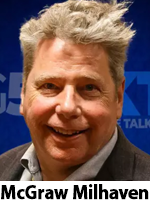 to coast. New station partnerships include WCCO-AM, Minneapolis; KTRS-AM, St. Louis; WPRO-AM, Providence; and KCMO-AM, Kansas City. The show airs live weeknights from 9:00 pm to 12:00 midnight ET. Westwood One says, “McGraw Milhaven delivers appointment listening for late-night audiences, featuring host McGraw Milhaven’s signature mix of compelling interviews, sharp analysis, and positive energy listener interactions. Milhaven brings both authority and approachability to national late-night talk radio – offering a fresh, contemporary voice grounded in experience.”
 advertisers are currently buying audio programmatically, up two times from 2022 (41%); 2) The most used programmatic audio demand-side platforms are Google Display & Video 360, The Trade Desk, and Amazon DSP; 3) Among publishers, the most utilized supply-side platforms for digital audio ads are Google Ad Manager, distantly followed by Amazon Publisher Services, Open X, and PubMatic; 4) Among those who purchase podcasts, Google DV360, The Trade Desk, and Amazon’s DSP are the most utilized demand-side platforms; and 5) Recent announcements from Amazon Ads indicate a major expansion of over-the-air AM/FM radio and audio advertising capabilities within the Amazon Demand Side Platform. Regarding that last point, the study notes that those moves “focus on bridging the gap between traditional broadcast AM/FM radio and digital, programmatic buying, allowing advertisers to use Amazon’s first-party signals for targeting and measurement.”
  government studies report most commutes are a solo affair. In the car, Honda drivers cannot be reached by social media, online video, or any digital platform while commuting to work. What are the audio habits of Honda drivers in all locations (home, work, vehicle, and some other place)? Edison examined audience shares among Honda drivers to ad-supported audio platforms at home, in the car, at work, and some other place. In all locations, Honda drivers devote 62% of all their ad-supported audio time spent to AM/FM radio.”
  understate the immense sales effect power of creative. Some 122 marketers placed creative as the third most important contributor toward driving sales behind targeting and brand. But the reality based on analysis of 450 ad campaigns indicates creative is far and away the most important driver of sales. Both marketers and agencies place the greatest importance on targeting. Experts caution that too narrow targeting is ineffective.
  agencies can use AM/FM radio in their upcoming media plans. Some key points include:1) AM/FM radio has a 64% share of ad-supported audio among registered voters; 2) AM/FM radio has substantial shares (62% to 65%) among Independents, Republicans, and Democrats: 3) Marketers and media agencies significantly underestimate AM/FM radio listening shares and dramatically overestimate Spotify and Pandora audiences; and 4) Digital audio only reaches a third of Americans. With AM/FM radio, reach soars to 73%.
  using print and television. The owner was stunned that in a local group of 125 people not one could name his company. Doug Hansen‘s Bug-a-Way Pest Control then embarked on an AM/FM campaign in which a jingle was created for his business and soon his company went from zero unaided awareness to 20%. The campaign helped create future demand for his company as 29% of locals surveyed said they would call his company if they needed pest control.
  audience over indexes for a slew of major purchase categories.” Some of the key findings in the study include: 1) The number of sports-formatted AM/FM radio stations has grown +14% over the last decade, while revenue shares increased +38%; 2) According to Nielsen, the sports format ranks an astonishing number one in streaming shares among 25-54s and 18-34s, while in-car listening is the dominant location of listening among over-the-air sports AM/FM radio listeners; 3) Advertising on sports AM/FM radio is more effective than TV sports because the AM/FM radio audience is far more attentive and sports engaged; and 4) Ranked third in income of twenty-four AM/FM radio formats, the sports format has seen household incomes grow 17% since 2020.
  times per week – Monday through Wednesday – and will be available on both YouTube and Rumble in digital video format with future expansion on other platforms. The company adds, “For the first time, Levin will offer audiences access to original digital video content via an ad-supported model, instead of a subscriber paywall. ‘Liberty’s Voice with Mark Levin’ will present exclusive, in-depth commentary from one of America’s most influential constitutional scholars and political thinkers. Sharing his intellectual rigor, brilliant wit, and signature passion, Levin will draw on history, economics, law, and philosophy as he goes beyond the headlines to examine the ideas and principles that shaped the United States – and the forces challenging them today. Each episode will deliver substantive analysis of current events, grounded in the founding ideals of liberty, limited government, and individual sovereignty, while exposing the dangers of centralized power and historical amnesia.”
 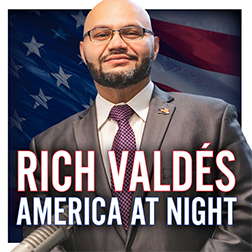 Media Federation and its streaming network Festiva TV syndication partnership. The deal will make Valdés’ late-night show exclusively in Spanish to Roku’s 90 million+ subscribed households. Valdés’ English-language show continues to be available via iHeartRadio, and Valdés says he is “completely open to English syndication opportunities across terrestrial radio, cable television, and streaming platforms like Rumble—building on my ongoing work in those spaces.”
 Media | Westwood One says, “The relaunch marks Bongino’s most extensive digital commitment to date, designed to meet increasing audience demand for long-form and in-depth content. The two-hour format strengthens the show’s position as a major voice in independent media, offering a highly engaging, daily destination for listeners seeking headline analysis, guest interviews, cultural commentary, and special ‘Bongino Army’ segments.” Bongino comments, “I’m excited to get back behind the mic and reconnect directly with the audience. This show has always been about cutting through the noise and talking honestly about what matters. We’re coming back bigger, bolder, and always unfiltered — exactly how people want it.” Westwood One and Cumulus Podcast Network president Collin Jones adds, “Dan Bongino is back! Few voices in talk media command the loyalty and firepower that Dan brings. His audience? Formidable. His influence? Undeniable. This promises to be an incredible journey as Dan drives the national conversation daily on the most important issues at hand, with authority that has been hard-fought and well-earned. Westwood One is beyond proud to help power the next chapter of ‘The Dan Bongino Show.’”