

Gomez Urges NAB to Push Back on “Election Year Intimidation”
FCC Commissioner Anna M. Gomez is petitioning the National Association of Broadcasters president and CEO Curtis LeGeyt to get behind broadcasters’ concerns about the Commission’s threats to investigate stations for news distortion or broadcast hoax for 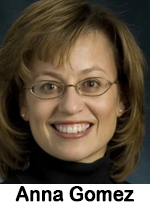 airing polling data “this Administration happens to dislike.” In a letter to LeGeyt, Gomez writes, “This Administration is running a coordinated, government-wide effort to reshape the media into its sanctioned messenger, and the Federal Communications Commission has become one of its most active instruments… The Commission’s own guidance is clear on this point. Enforcement of the news distortion policy requires proof that a broadcaster deliberately distorted a factual report on a significant event, not a minor or incidental one, and courts have recognized that the policy draws a firm line between deliberate distortion and mere inaccuracy or differences of opinion.”
Gomez also pointed to the issue of the equal opportunities rule 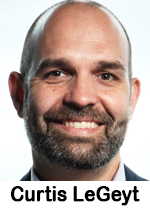 noting that guidance has been settled on the matter for decades. But she says that acting without input from the full Commission and beyond its authority, the Media Bureau rewrote that settled guidance. “This agency does not get to redefine the public interest standard as whatever happens to serve the political interests of whoever is in power. That standard was written into the law to protect the audiences these stations are licensed to serve, not the officials who regulate them. A broadcaster reporting in good faith, whether covering widely available polling data, booking a candidate based on newsworthiness, or airing political advertising in compliance with the law, should know that it is fulfilling that obligation rather than violating it.”
She wraps up by writing: “Despite NAB staying largely quiet through the first year of this censorship and control campaign, I want to acknowledge that you have not stayed completely silent, and for that I am grateful. Your organization spoke up against the FCC’s unprecedented early license renewal order, and I do not take that for granted given the position NAB itself occupies. But I would not be doing my job if I did not say plainly that the volume of that response has not yet matched the scale of what your members are facing. An industry confronting a coordinated effort to turn licensing authority into leverage over election-year coverage needs more than a couple of tempered statements. Your members deserve to hear from their leading voice with the same clarity and urgency that their First Amendment rights, and their bottom line, call for.” You can read the whole letter here.
 competition, local journalism, editorial independence, and democratic discourse throughout Eastern Missouri.” Shannon also asserted that news/talk KMOX “occupies a ‘unique position in the public trust, and is one of the most influential broadcast institutions in the Midwest, upon which residents rely during natural emergencies, elections, and ‘moments of profound civic importance’ and that ownership concentration reduces the number of independent editorial voices available to the public, ‘increas[ing] the possibility that important community issues will be filtered through a single corporate perspective.’” The Commission did not agree and called Shannon’s concerns about future programming, management and operational decisions “speculative.” The Commission also said Shannon’s “concerns that the stations’ editorial decisions may not remain independent from the owner’s broader commercial, political, real estate, hospitality and financial interests are conjectural.”
 Unless you live in Hawaii or most of Arizona (except the Navajo Nation) or American Samoa, Guam, the Northern Mariana Islands, Puerto Rico, or the U.S. Virgin Islands, we “Fall-back” to Standard Time at 2:00 am Sunday morning… when, suddenly, it’s 1:00 am again.
 Ask broadcasting professionals what they need, and you’ll hear the same three answers: finding salespeople, keeping them, and growing revenue. The order varies, but the concerns are on repeat.
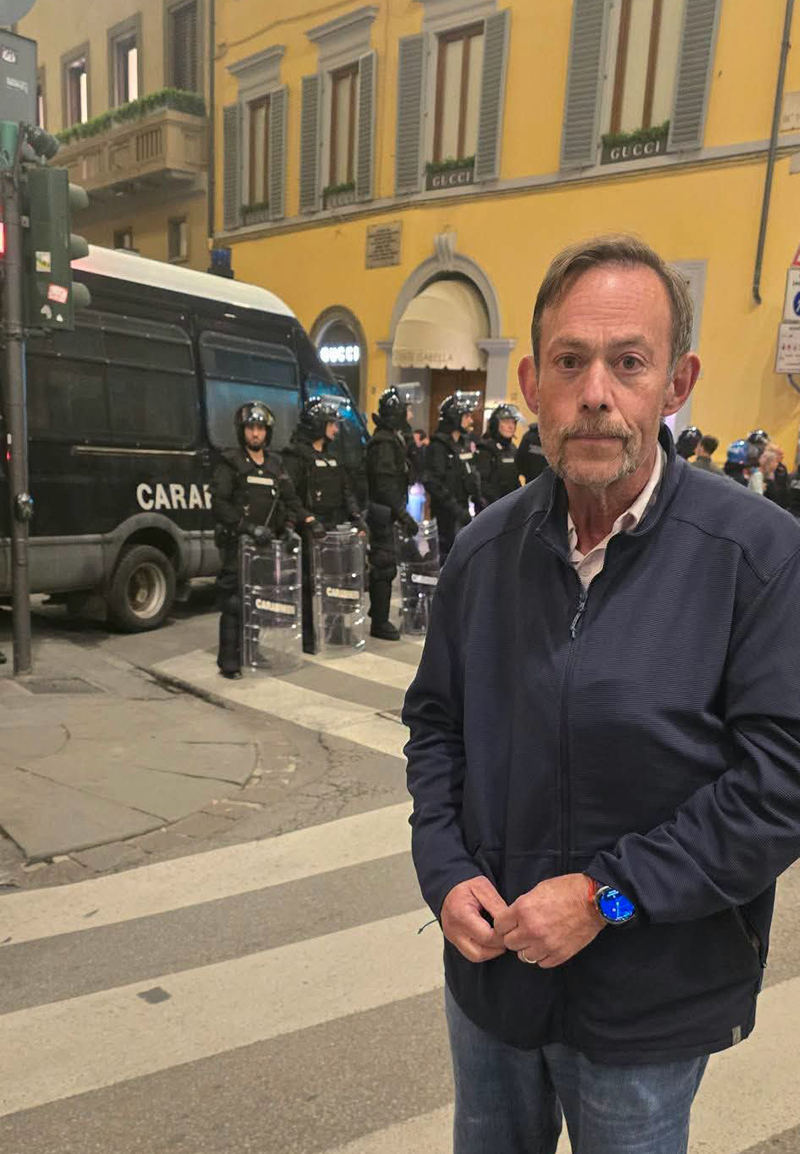


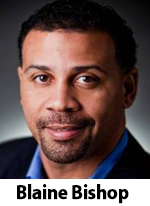 himself) reports that Bishop was let go from the midday “Cover Two” program where he co-hosted with Zach Lyons. Kuharsky says Bishop’s exit “stemmed from a non-physical altercation.” Lyons read the following statement yesterday (10/22): “Before we get started, I want to acknowledge that Blaine Bishop is no longer with ‘104.5 The Zone.’ We thank Blaine for all of his contributions over the years to the station, our listeners and to Nashville’s sports community. We wish him the best moving forward.”
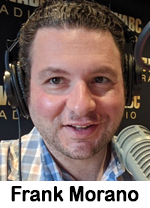 New York City councilor Frank Morano is dipping his toes back in the broadcasting waters today (10/23) as he fills in for Michael Smerconish on SiriusXM’s POTUS Channel. Morano – who transitioned from his late night WABC, New York radio program to politics as a councilor representing Staten Island – says he’s looking forward to hosting the show. “We’ll discuss all the news of the day. My guests include legendary actor and entertainer William Shatner.”
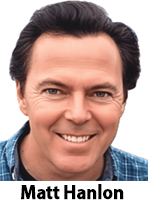 posted an obituary noting that he “spent decades in radio management, sales and operations, overseeing major market clusters and helping develop regional programming networks.” During his career Hanlon served as Midwest Division president for Citadel Broadcasting, served with Townsquare Media, was VP and market manager for Audacy (then Entercom) in Charlotte and most recently was director of sales for Saga Communications in Des Moines.
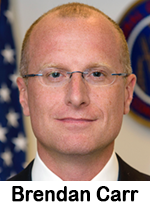 broadcast news distortions or hoaxes, Federal Communications Commission chair Brendan Carr said via a post on X, “During this election season, there has been a significant surge in entirely Fake Polls and Suppression Polls designed to do nothing more than interfere with the regular functioning of the electoral process and alter the normal patterns of voter turnout and enthusiasm. Broadcasters are advised to avoid engaging in News Distortions or running Broadcast Hoaxes by airing Polls that would violate their regulatory obligations.”
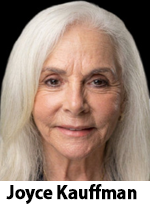 in part, “After a lot of thought, I’ve made one of the most difficult decisions of my career. It’s time for me to hang up my headphones and begin a new chapter… retirement.
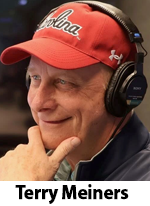 and most prestigious community recognitions honoring leaders whose personal contributions go beyond professional success to shape the city’s future, strengthen civic life and celebrate Louisville’s creative legacy.” iHeartMedia region president Kristy Beebe says, “For generations, Terry Meiners has been one of Louisville’s most trusted and recognizable voices. Through his commitment to our community, his passion for local storytelling, and his unwavering support of organizations like the Crusade for Children, Terry has made an immeasurable impact on Louisville. We are proud to see him honored as the 2026 Louisvillian of the Year, a recognition that reflects both his extraordinary career and his lasting legacy of service.” AAF-Louisville will host a special reception on December 2 to celebrate Terry Meiners and his contributions to the Louisville community.
 begin Tuesday, November 3, at 6:00 pm ET. Senior vice president Phil Boyce says, “With control of Congress at stake, the 2026 midterms could have enormous consequences for the remaining two years of President Trump’s term. From the rise of Democratic Socialist candidates and calls to impeach the president to the question of whether pollsters are once again underestimating conservative Republican voters, there are major stories to follow on election night. Our team will be there as the results come in, bringing audiences the reporting and analysis they need to understand what is happening across the country.”
 downloads for participating shows. iHeart Audience Network’s “Stuff You Should Know” is #1, followed by Audioboom’s “Pod Save America” at #2 and iHeart Audience Network’s “My Favorite Murder” at #3. Cumulus Podcast Network’s “The Dan Bongino Show” remains ranked #4. Other talk radio-related podcasts of note include “Armstrong & Getty On Demand slipping one spot to #12, “The Clay Travis and Buck Sexton Show falling three paces to #19, and Salem Podcast Networks’ “The Charlie Kirk Show” sliding two spots to #21.



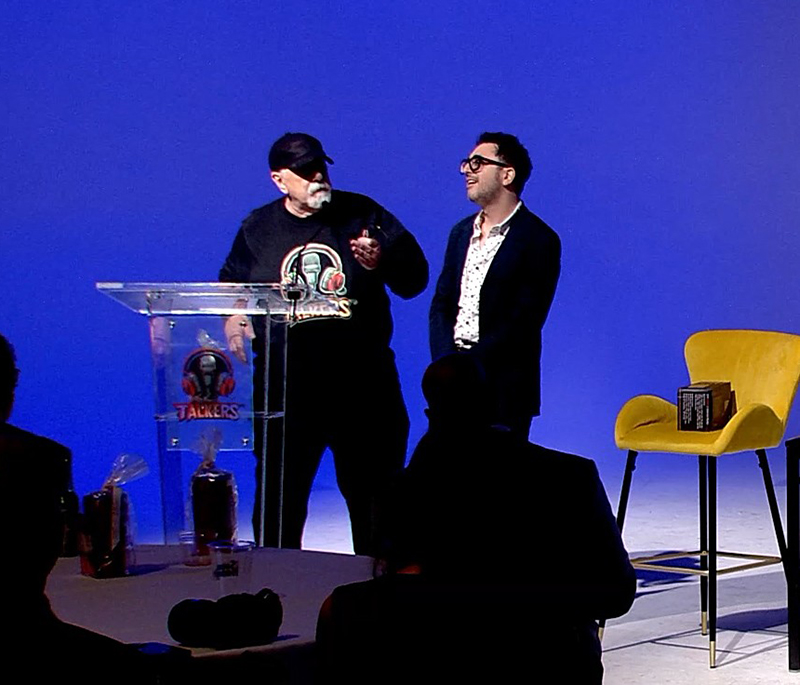
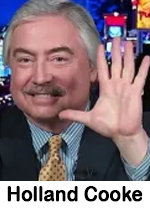
 Cooper was honored at TALKERS 2026 this past June as the conference’s “Special International Guest” – see photo with Cooper (r) being introduced by Michael Harrison (l).
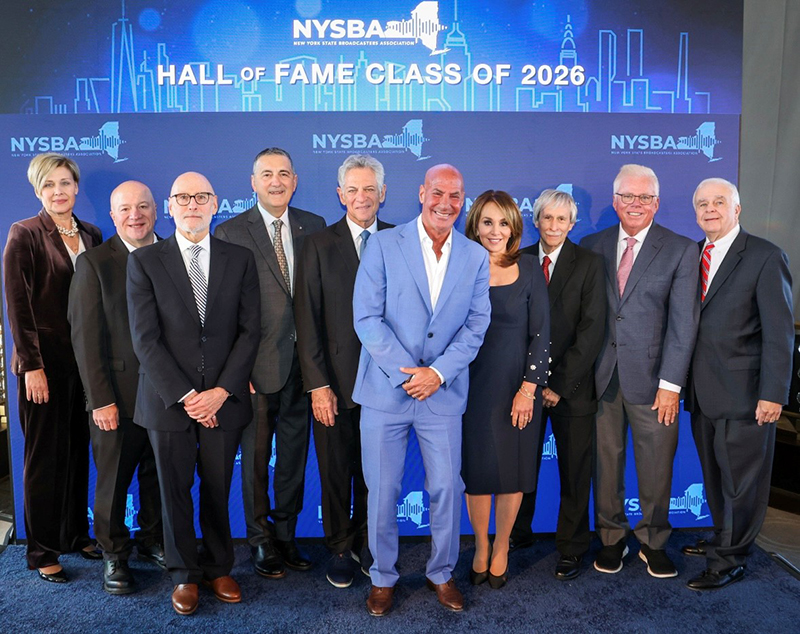
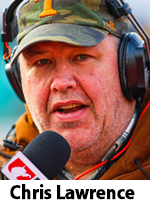 with WCHS-AM, Charleston, West Virginia talk host Chris Lawrence the only one across five categories. Lawrence was named the winner in the Small Market Personality of the Year during last night’s ceremony at the Edison Ballroom in New York City on the eve of NAB Show New York. Other spoken-word honors went to Cox Media Group’s 95.5 WSB (WSB-AM/WSBB-FM, Atlanta) for News/Talk Station of the Year and to Audacy’s WEEI-FM, Boston for Sports Station of the Year.
 family care, housing emergencies, relocation, or theft. BFoA chair Scott Herman says, “This expands our ability to reach broadcasters who are struggling to meet their expenses because of extraordinary circumstances. I was delighted that the Board unanimously approved this initiative. We are up and running and ready to help more members of our broadcasting community when they need it most.” The BFoA also provides Monthly Grants to broadcasters dealing with prolonged illnesses and Emergency Grants to those affected by disasters, including floods and hurricanes. For more information, radio and television professionals who currently or previously worked in broadcasting may visit
  stream of its television programming, Court TV will now offer SiriusXM listeners access to expert legal analysis, in-depth reporting, and detailed insight into the evidence and legal perspectives at the center of the cases captivating the nation.” Law&Crime was founded by ABC News chief legal analyst Dan Abrams.