


Broadcasters Know Both Sides to the Benefits of Fair Use
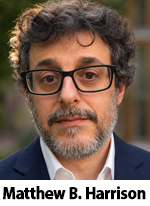
By Matthew B. Harrison
TALKERS, VP/Associate Publisher
Harrison Media Law, Senior Partner
Goodphone Communications, Executive Producer
 At 8:15 am, a radio host plays part of a television interview and explains why the guest’s answer deserves scrutiny. By noon, another program has clipped that host’s commentary and is taking it apart. The first use feels like doing the job. The second can feel like somebody helping themselves to your work, especially when they sell advertising around it.
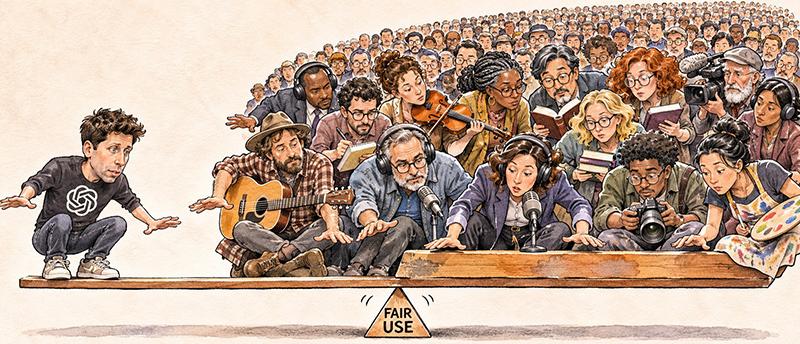
That tension gives broadcasters a useful perspective on OpenAI’s October 30 statement, “Fair use benefits everyone.” The company assembled arguments supporting fair use in its copyright litigation involving news publishers, emphasizing benefits to creators, researchers, and the public. It is advocacy from a party to the litigation, not a judicial ruling. But the broader proposition deserves consideration from an industry that regularly experiences fair use from both directions.
For a talk host, the benefit can be immediate. An audience may need to hear the disputed answer, see the advertisement, or examine the passage before the host’s criticism makes sense. Requiring permission for every such use could give the subject of criticism considerable control over the discussion. Fair use provides room for qualifying commentary and reporting without that permission, although calling a segment “news” does not automatically establish the defense.
Now move to the other microphone. Your station secured the interview, paid the producer, developed the questions, and cultivated the audience. Another outlet extracts the most revealing exchange and uses it to challenge your coverage. Your investment matters to the business, but it does not automatically give you the power to prevent criticism that qualifies as fair use.
Change the example again. Instead of analyzing your interview, the other outlet uploads a substantial uninterrupted portion, adds a brief introduction, and offers listeners much of the experience your station produced. That raises a different question about substitution and the market for your work. The analysis considers the purpose, the nature of the original, the amount and significance taken, and the effect on its potential market, rather than simply counting seconds or checking for a credit.
This is where broadcasters can contribute something valuable to the AI debate. They understand why access to existing expression supports new commentary, and why producing that expression costs money. They also know that a competing program can win listeners through better reporting or sharper analysis. Competition alone does not tell us whether someone has improperly used protected material.
OpenAI and its supporters argue that training models serve a different purpose from publishing the works used to train them. Broadcasters can take that argument seriously while still asking what material was copied, how it was obtained, and what uses the law permits. Training a model, generating an answer, and publishing that answer involve distinct conduct. A persuasive argument about one does not automatically resolve the others.
The practical discipline is consistency. Before borrowing, identify what the audience needs to encounter and what your program contributes. Before objecting to someone else’s borrowing, examine whether they are criticizing your work or supplying a substitute for it. Neither the presence of advertising nor your understandable irritation settles the question.
That experience on both sides of the microphone is central to my book, Playing the Clip, which examines fair use in the daily work of media creation. Broadcasters need meaningful protection for what they produce, and meaningful freedom to examine what others produce. Fair use benefits the profession by helping preserve both, even when its application to our own work feels less comfortable.
Matthew B. Harrison is a media and intellectual property attorney who advises radio hosts, content creators, and creative entrepreneurs. He has written extensively on fair use, AI law, and the future of digital rights. Reach him at Matthew@HarrisonLegalGroup.com or read more at TALKERS.com.
 Veteran journalist, author, political commentator, and 77WABC Radio personality Dominic Carter was honored with the American Heritage Award at the Kings County Conservative Party’s Annual American Heritage Reception on July 23 at the Knights of Baron DeKalb in Sheepshead Bay, Brooklyn. The event celebrated Carter’s more than four decades in broadcast journalism, recognizing his distinguished career as a radio host, television commentator, author, and one of New York’s most respected media voices.
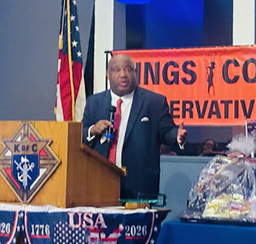 Frances Vella Marrone, the reception brought together elected officials, candidates, community leaders, and supporters to recognize Carter’s professional achievements while celebrating the values of perseverance, public service, and the American Dream.
 connect with listeners, deliver compelling talk content, and handle breaking news and severe weather with credibility, confidence, and energy. As part of our award-winning team, you’ll shape the conversation every day by interviewing newsmakers, reacting to breaking stories, and engaging directly with the audience on-air and online.
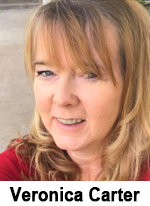 Broadcasting weekdays 5:00 am to 9:00 am PT, the show delivers what station sources describe as “unmatched news coverage of the critical stories shaping the community.”
 The program has a reputation for being a trusted news source dedicated to delivering timely and accurate coverage tackling everything from local and national news to business, entertainment headlines plus traffic and weather reports. Known for her warm delivery and engaging storytelling, Carter’s distinguished career includes roles at major news outlets such as WBBM in Chicago and Newsradio KFBK in Sacramento, where she became known for her sharp reporting and ability to connect with audiences. She will report to PD Mary Ayala who tells TALKERS, “I’m thrilled to welcome Veronica to our team,” adding, “Her depth of experience, vibrant enthusiasm and passion for connecting with the people of California make her a great addition to our morning show.” Carter comments, “I’m honored to join such a respected team and excited to connect with our listeners each morning, bringing them the news and stories that matter most.” Carter replaces LaDona Harvey, who announced she was stepping down from the role earlier this month.

 A shocking number of highly qualified broadcasters have lost their jobs. The venture capitalists that financed the big radio companies are the people who should be fired, but that’s the next column. Let’s get you a job.