 Incorporating copyrighted material, such as video clips or actualities, can enhance your content, but understanding fair use is critical to avoid legal trouble. Fair use permits limited use of copyrighted material for purposes like criticism, commentary, news reporting, or parody without needing permission. Courts assess fair use based on four factors: purpose and character of the use (is it transformative?), nature of the work (factual vs. creative), amount used, and the effect on the market. Learn practical tips on safely navigating fair use, including using brief excerpts, transforming content, and considering market impact.
This is the second in a series of articles addressing the broader topic of fair use for media creators. Click here for the first installment.
Understanding Fair Use: Purpose and Character of the Use. When using copyrighted material belonging to others in the creation of your own media content, it is important to understanding the concept of fair use. Fair use allows copyrighted material to be used without permission for purposes like criticism, commentary, news reporting, education, or parody. It’s not an absolute right but rather a defense you can claim if challenged. Courts assess fair use based on four key factors, all which broadcasters should carefully consider.
The first factor of fair use that courts consider is the purpose and character of the use. Specifically, is the use of the material transformative? Transformative use is a key concept that can often determine whether your content qualifies as fair use or not – and really is the heart of the inquiry.
What Does Transformative Mean? In legal terms, a use is considered transformative when it adds new expression, meaning, or message to the original work. This is different from merely copying the work or using it for the same purpose as the original creator. By transforming the material, you’re creating something that serves a different purpose or offers new insights, rather than simply replicating the original content.
Example: Auto-Tune the News. One of the most famous examples of transformative use is the Gregory Brothers’ viral “Auto-Tune the News” series, which turned news clips into catchy, auto-tuned songs. In 2010, they took an interview clip with Antoine Dodson, who was describing an attempted home invasion, and turned it into the widely popular “Bed Intruder Song.” In this case, the original news segment was purely factual—a straightforward broadcast of a local news report. However, by remixing the clip with auto-tuned vocals and adding music, the Gregory Brothers transformed the clip into a piece of entertainment and social commentary. This new purpose—entertainment and humor—was distinct from the original intent of simply delivering news, making it a classic example of transformative use. Although the raw news footage was copyrighted, the remix was so different in tone, presentation, and purpose that it was protected under fair use. The transformation added new creative elements and reframed the original material as a humorous, catchy song.
How Does This Apply to Radio? Let’s take this concept and apply it to radio, a medium that often uses clips from other sources. Imagine you’re running a talk show, and you want to use excerpts from a political speech to make a satirical point about current events. If you simply play the speech on air without any changes, it may not qualify as fair use because you haven’t transformed the original material – you’re just rebroadcasting it. However, if you take portions of the speech and then critique, analyze, or poke fun at it, you’re more likely to be in the clear. For example, if your show involves playing clips of political speeches interspersed with humorous commentary or parody, you’re repurposing the original work in a new and transformative way—much like “Auto-Tune the News.”
Another example could be a radio show that plays clips from popular songs but recontextualizes them within a larger discussion of musical trends or cultural history. If the song clips are used to illustrate a point and not simply for entertainment value, the new purpose—educational or critical analysis—can qualify the use as fair. In cases involving parody or political commentary on radio, the fair use defense has sometimes been successful. For instance, radio shows that use short clips from speeches, interviews, or news broadcasts for commentary, satire, or criticism can invoke fair use if the content is transformed for a new purpose.
One example is when talk radio shows play brief excerpts of copyrighted works (e.g., speeches, news clips) to critique or analyze them. If the use is transformative and doesn’t replace the original work in the marketplace (i.e., people wouldn’t listen to the radio show as a substitute for the original), courts have shown a willingness to accept fair use in such contexts. However, detailed legal battles involving radio stations using copyrighted material for parody or commentary are less common than those involving music licensing.
Example: Rogers v. Koons (Rebroadcast of News Content). While not as widely reported as music-related cases, one example of a copyright infringement suit involving the rebroadcast of talk content was a case where a news organization sued a radio station for replaying portions of its copyrighted interviews and reports without permission. In cases like this, radio stations or broadcasters may try to claim fair use based on the purpose of the rebroadcast, such as using a portion of an interview for commentary, satire, or news reporting. However, if the content is used purely to replay the original, as opposed to being transformed into a new, critical, or educational piece, the fair use defense may not succeed. For example, news stations may license their talk content (like interviews or original reporting) through syndication deals. If a radio station broadcasts this content without securing the necessary licensing agreement, they may face a copyright lawsuit.
Example: Talk Show Hosts and Syndicated Content. A real-world scenario can involve syndicated talk shows or podcasts that are copyrighted. Radio stations can face lawsuits if they replay this content without proper authorization. An example would be stations rebroadcasting popular talk radio shows or political commentaries (such as those by syndicated hosts like Rush Limbaugh or Howard Stern) without purchasing broadcast rights. This unauthorized use can lead to legal action from the copyright holders. For example, if a station replays clips of an interview conducted by NPR or a news network for entertainment or even news purposes, and it doesn’t transform the content for criticism or commentary, it may be violating copyright law. Radio companies might try to claim fair use, but the courts will look closely at whether the replay served a new, transformative purpose or was simply a verbatim rebroadcast.
Key Considerations for Broadcasters. To better understand whether your use of copyrighted content is transformative, ask yourself:
• Are you adding new meaning or message? The more your work transforms the original content – such as using it for commentary, criticism, or satire – the more likely it qualifies as fair use.
• Does your use serve a different purpose? If you’re using the content for a new purpose, like entertainment, education, or social commentary, rather than simply duplicating the original, it can be seen as transformative.
• Are you just using the original for its own sake? If the copyrighted material is used in a way that does not add new expression or meaning, it’s less likely to fall under fair use. Transformative use is a powerful defense in fair use claims, but it’s not a guarantee. Always make sure your purpose and character are different from the original intent of the work, and when in doubt, seek legal counsel.
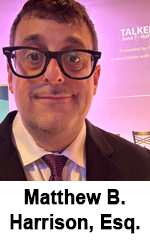
Media attorney, Matthew B. Harrison is VP/associate publisher, TALKERS; Senior Partner, Harrison Media Law; and executive producer, Goodphone Communications. He is available for private consultation and media industry contract representation. He can be reached by phone at 724.484.3529 or email at matthew@harrisonmedialaw.com



 WURD Radio Endorses Kamala Harris for President. For the first time in its 20+ year history, Philadelphia’s only Black-owned radio station, WURD Radio has endorsed a political candidate — Kamala Harris for President of the United States. Prompted in part by the decision from owners of the Los Angeles Times and The Washington Post to overrule planned endorsements by their editorial boards, sources at the station tell TALKERS, this decision underscores the importance of independent media ownership. From the endorsement: “Our founder, Walter P. Lomax Jr., M.D., understood that the media has the power to shape perceptions, images, narratives and, most importantly in this election, to tell the truth. He understood that the media can demonize or humanize, destroy or exalt, diminish or elevate. Dr. Lomax knew that mainstream media often marginalizes, caricatures and maligns Black people. WURD is in a unique position to speak honestly and emphatically about what matters most to our community because we are independently owned.” To read the entire text of the endorsement, please click here.
 SiriusXM Tips Off College Basketball Coverage with 74 Games on Opening Night, November 4. SiriusXM will deliver college basketball fans an extensive schedule of live games throughout the 2023-24 college basketball season, starting with a slate of 74 women’s and men’s matchups to choose from when the season tips off this Monday (11/4). The men’s schedule includes all 19 teams from the Associated Press Top 25 that are in action on Monday night, including the season’s first matchup of Top 25 ranked teams – #8 Baylor @ #6 Gonzaga (11:30 pm ET). The opening day schedule of women’s games on SiriusXM includes 12 teams from the Associated Press Top 25 and features a couple of Top 25 matchups – #20 Ole Miss @ #3 USC (noon ET) and #5 UCLA @ #17 Louisville (2:30 pm ET). Throughout the season SiriusXM listeners will get access to dozens of game broadcasts each week involving teams from the SEC, Big Ten, Big 12, ACC, Pac-12, Big East and more.
 Newsmax Launches in France on Molotov. Newsmax TV, one of America’s most popular news channels, just launched on Molotov, one of France’s leading TV platforms, as U.S. voters go to the polls to pick their next president. The Newsmax channel went live on Molotov’s platform on October 24, 2024, expanding its global footprint with 19 million Molotov users in France and French-speaking territories. Molotov is one of France’s main TV services offering streaming television to internet users across the nation and its territories. Molotov subscribers can tune to Newsmax via the platform’s free tier.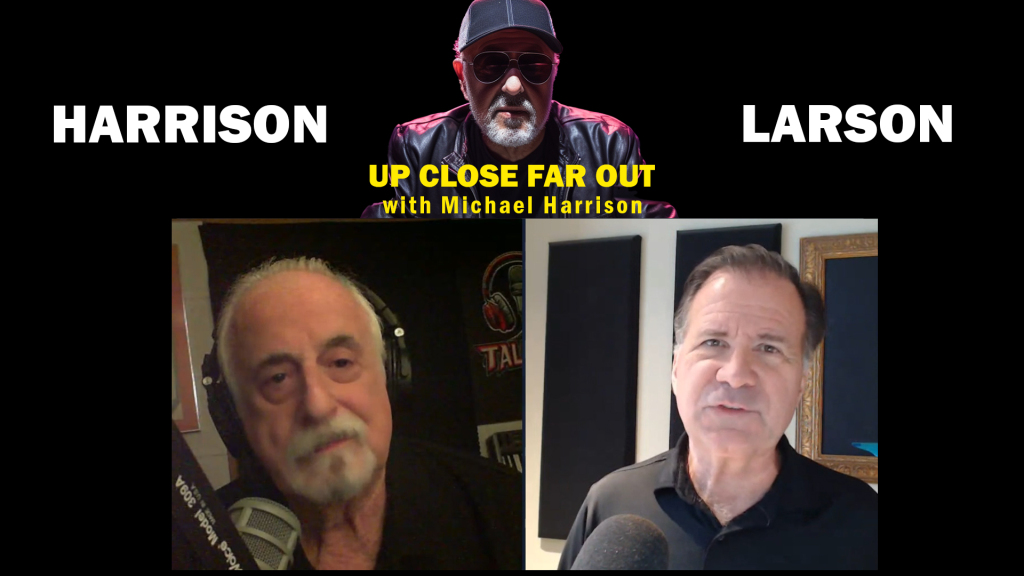


 Andrea Mitchell to Receive Prestigious Award. Alliance for Women in Media (AWM) has announced that Andrea Mitchell, NBC News chief foreign affairs correspondent and chief Washington correspondent, will be honored with the prestigious Gracies Icon Award at the 2024
 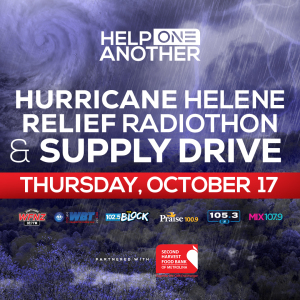 Radio One Charlotte, in partnership with Second Harvest Food Bank of Metrolina, is presenting an all-day radiothon today (10/17) to support those affected by Hurricane Helene. This event is taking place from 6:00 am to 7:00 pm across Radio One Charlotte stations: WOSF, WFNZ, WLNK, WPZS, WOSF-HD2 and heritage news/talk WBT. Marsha Landess, Radio One Charlotte regional VP, tells TALKERS, “We are focusing the power of our six radio stations to help raise funds for the relief efforts for our neighbors in the western part of our state. We know their lives have been turned upside down, and we want to do our part to assist them in rebuilding and recovering. Our goal is to raise a substantial amount to help them begin to put their lives back together. Every dollar counts, whether large or small.” Kay Carter, CEO of Second Harvest Food Bank of Metrolina, adds, “Everyone at Second Harvest Food Bank of Metrolina is so grateful to Radio One for all their efforts to assist us as we work to help the many victims of Hurricane Helene. The needs are great, and we want to thank all the radio stations and their listeners for considering a donation to the Radiothon. We promise to use the donations wisely to provide food and other supplies throughout the affected areas.”
 Even as its stations were airing hundreds of hours of continuous live news and storm coverage during hurricanes Helene and Milton, Cox Media Group (CMG) was raising nearly $1 million and providing food, water and necessities for impacted people and communities. That includes taking mobile charging stations into communities for people to charge their phones and other devices. Hurricane relief efforts took place across CMG’s southeast TV and Radio stations. “These efforts by our CMG family highlight the indispensable role of our stations – and our entire broadcasting industry – as we work together to make a powerful and positive impact on the communities we live in and serve,” said Dan York, CMG’s president/CEO. “As importantly, none of this would have been possible without the incredible support from our local partners and audiences. The response of our viewers and listeners has been nothing short of remarkable.” CMG radio stations include news/talker WDBO 107.3 / AM 580 in Orlando.
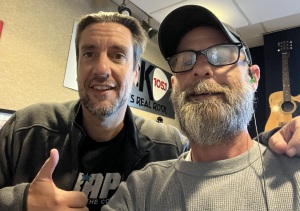 Premiere Networks personality Clay Travis co-hosted “The Clay Travis and Buck Sexton Show” live from affiliate News Radio 570 WWNC in Asheville, NC (10/11). Travis toured the area via helicopter to witness the extensive damage from Hurricane Helene in an effort to continue raising awareness, funds and volunteers for hurricane relief that will be needed for months to come. During the visit, WWNC morning host/news director Mark Starling joined the broadcast for a powerful conversation about the devastation the community has experienced. He detailed how the station covered Hurricane Helene, providing vital information to the Asheville community including coordinating rescue efforts and reuniting families. Starling, who stayed at the station for 14 days straight during the hurricane, said: “…when TV couldn’t do it, the newspaper couldn’t do it, there was nothing online, the only thing left was AM/FM radio. All seven stations stayed on the air simulcasted… we were wall-to-wall…what we wanted to do here at the radio station, at iHeart Asheville, was we wanted to show the community that we can get through this. And we’ve been kind of repeating this line: ‘community is the answer to this crisis.’ …what we have seen is the absolute best in humanity in an absolute horrific, horrific time.” Listen to their full conversation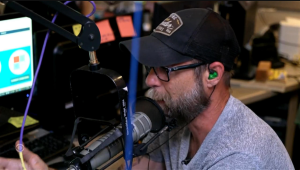
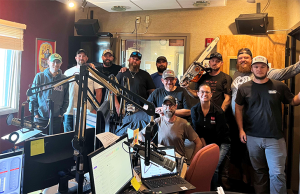
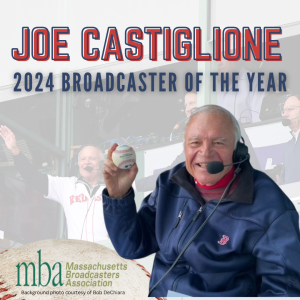 Castiglione, who announced his retirement prior to the conclusion of the 2024 Red Sox season spent 42 seasons in the Red Sox booth, making him the longest tenured radio broadcaster in Red Sox history. A native of Hamden, CT, he began his career calling Colgate University football and baseball games while earning a B.A. from the university. He would later graduate from Syracuse University’s prestigious Newhouse School with a master’s degree in Radio and Television. Castiglione’s Red Sox legacy started in 1983 when he was paired with another Red Sox legend in Ken Coleman. In his 40+ years with the Red Sox, Castiglione was the voice for millions during the lowest lows and highest highs of the franchise. He’s maybe most famous for his call at the end of the 2004 World Series which ended an 86-year World Series drought for the Sox, exclaiming “for the first time in 86 years, the Red Sox have won baseball’s world championship. Can you believe it?” The phrase would become a signature call. Joe Castiglione was inducted into the Red Sox Hall of Fame in 2014, the Massachusetts Broadcasters Hall of Fame in 2015, and was named the Baseball Hall of Fame’s Ford C. Frick Award winner, presented annually by the Hall of Fame for excellence in broadcasting, in 2024.
 WOR, New York morning co-host Michael Riedel returned to the airwaves yesterday morning (10/1) after a camping trip to North Carolina that turned into a rather harrowing experience due to Hurricane Helene.
  Riedel arrived in North Carolina last Tuesday and learned from his group’s guide that the forecast was rain for the entire duration of their trip. At that point, no one connected the rain with the hurricane, however. When their time on the mountain first began, Michael and his fellow hikers may have thought their near run-in with a bear was going to be the craziest part of their trip, but after two days of near-steady rain, Riedel’s group’s guide made the decision to end the hike and come down the mountain to seek safety. “The guide said if we don’t get down to the road…the river is going to flood and we will be trapped,” Riedel told his co-host Len Berman and morning news anchor Larry Mendte. “[But] all of the little streams and the creeks that we crossed on the way up…were now raging torrents of water, and we had to find places to cross. And when we crossed the streams, we all had to, like, hold on to each other to form a chain so that the water wouldn’t wash us away…and we had to do that three times.” Even though they were without electricity, internet, or phone service and had virtually no food and were down to just four bottles of water to share among 10 group members, Riedel and his group found a bed and breakfast in downtown Asheville that despite calls for evacuation was willing to take them in. “You know, I have to say I was very lucky,” Riedel reflected. “There was a woman who worked [there who] took water from the Creek behind the B&B and… made vegetable soup [using vegetables from their garden]…to feed us.” Ultimately, after three days of being stranded, Riedel was able to share a ride to the airport with another guest at the bed and breakfast and landed back at LaGuardia airport Monday evening (9/30). Talk about home sweet home. To hear more about Riedel’s adventure,
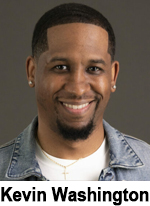 Effective 10/1, Kevin Washington has been named operations manager for Alpha Media’s five Dayton, OH stations (WDHT-FM, WROU-FM, WGTZ-FM, WCLI-FM and sports talk, WING-AM). Washington has 20+ years of experience with Alpha Dayton and most recently held the position of APD/promotions director. Alpha Media’s SVP/market manager Brett Beshore tells TALKERS, “I’m thrilled to be promoting Kevin into this pivotal role with Alpha Dayton. He’s consistently demonstrated strong commitment to the organization’s values and goals, delivering exceptional results with everything he’s undertaken. There’s no one more deserving. He’s the absolute best choice to lead our highly[1]talented team with our heritage brands.” Washington adds, “I’m excited to take on this new role with Alpha Media. We have great stations in the market and greater people inside the building. I’m looking forward to this next chapter.”
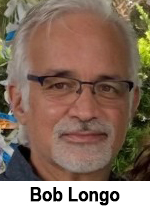 After 35 years of service and leadership in local broadcasting, Bob Longo is retiring as VP/GM of Cox Media Group (CMG) TV – Jacksonville (WJAX-TV and Hoffman Communication’s WFOX-TV), effective Dec. 31. Longo’s career has deep roots in journalism. He started in radio as a reporter, anchor, news director, and talk host before moving to TV as a reporter and anchor, executive producer, and news director. He led newsrooms in Binghamton, Buffalo, Hartford, Pittsburgh, Orlando, and Jacksonville. He joined CMG in 2014 and was promoted to VP/GM in 2017. “Bob has been successful at every stop because he’s a personable and engaged leader with an unwavering commitment to journalistic excellence and financial performance,” said Dan York, CMG’s president/CEO. “He’s consistently brought passion to serving his local communities and has been an ardent advocate for the value of local news and investigative journalism. While we’re happy for him, we’re going to miss Bob’s optimism and leadership.”
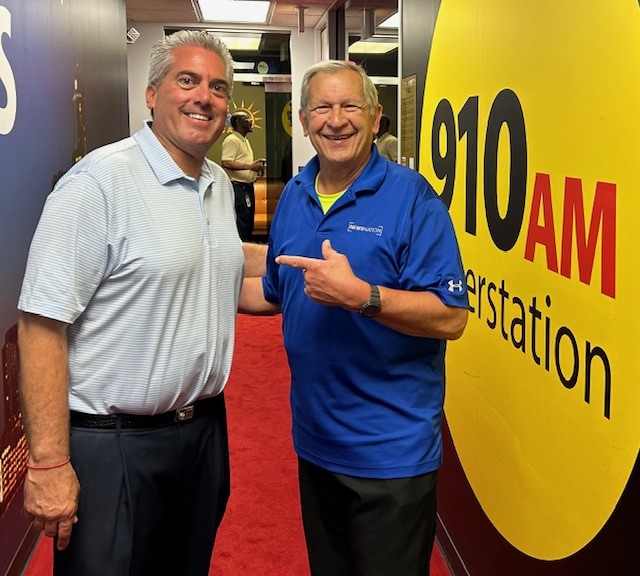 “Our industry is going to take a while to reset itself, like the newspaper industry,” he said, estimating that this “reset” would come in 10 years, or not at all. “This might be the new normal.” Pictured above: Adell (l) with radio historian and videographer Art Vuolo (r). Vuolo tells TALKERS, “He invited me to video in studio the launch of Super Station 910 the first week of September a year ago as he re-branded WFDF-AM 910 as news/talk. He wanted to go after WJR, but with mostly syndicated programming from Premiere Networks. Interestingly 910 now with 50 kw is the third biggest AM signal in Michigan!” For more info, see the entire Detroit Free Press article here.
 Mentoring and Inspiring Women in Radio, Inc. (MIW), a 501(c)(3) non-profit organization dedicated to the advancement of female leadership in radio broadcasting, and the National Association of Broadcasters Leadership Foundation (NABLF), name Rachel Haggerty as the 2024 MIW NABLF Launch Program mentee. Started in 2023, Launch is a partnership between MIW and the NAB Leadership Foundation dedicated to supporting and guiding women in radio who are relatively new to the industry.
  The first of its kind, this program fosters the development and curation of talent. Haggerty graduated from Seton Hall University in 2019, where she was actively involved with WSOU-FM, serving as assistant technical operations director and later as student manager. After graduation, she completed the National Association of Broadcasters Technology Apprenticeship Program, interning with iHeartMedia’s New York City radio stations. She then worked locally and with a national support team at iHeartMedia before becoming the assistant chief engineer at WABC-AM. Since 2023, she has returned to iHeartMedia New York, working with Premiere Networks on nationally syndicated talk shows. Rachel is also an active member of the Society of Broadcast Engineers and holds a Certificate in Broadcast Radio Engineering.
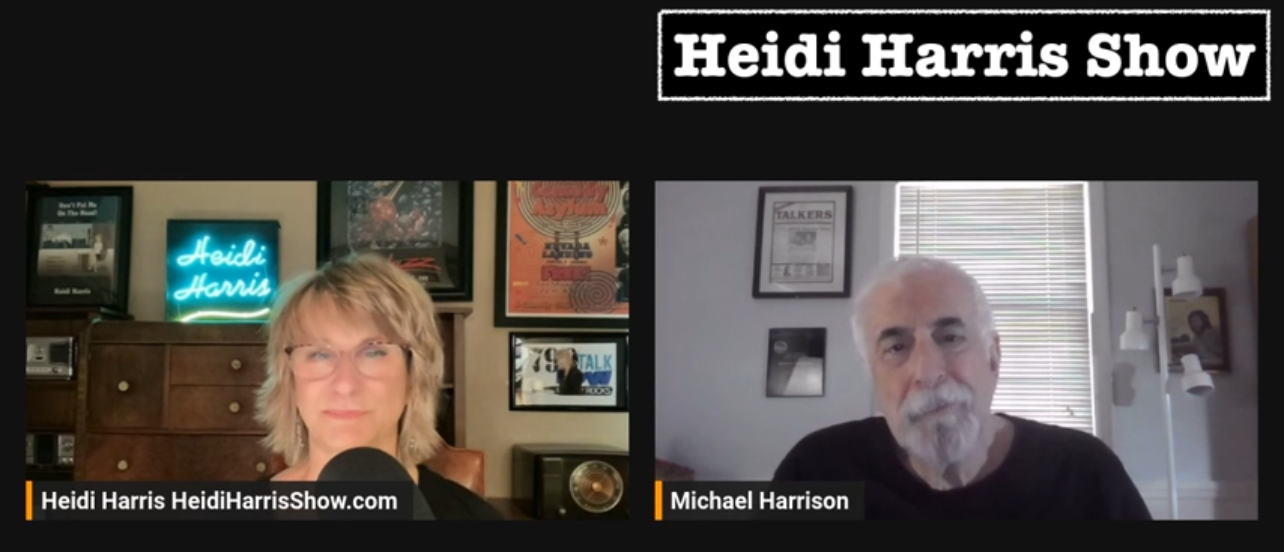 Harrison addressed the issue of artificial intelligence’s impact on talk show hosts as well as society in general presenting a mixed forecast of both good and bad news. To watch the video in its entirety please click here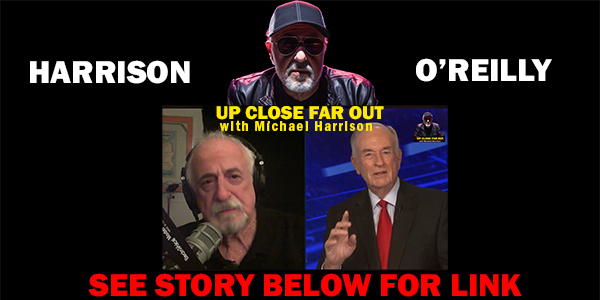
 Fox Weather Names Former Weather Channel Exec Jason Hermes as VP/Ad Sales and Partnerships. FOX Weather, FOX News Media’s free ad-supported streaming television “FAST” weather service, has hired Jason Hermes as vice president of advertising sales and partnerships, announced Trey Gargano, EVP of FOX News Media advertising sales. Hermes, who was most recently the VP of content marketing sales at The Weather Channel, began his new role yesterday (9/10) reporting to Dan Realson, SVP, FOX News digital sales. Gargano said, “We are thrilled to welcome Jason to the FOX Weather team as we’re certain his decades of experience in developing and executing innovative strategies will help drive monetization and operations across our growing weather platform.” Hermes tells TALKERS, “In just three years, FOX Weather has become the fastest growing weather service in the country, and I am excited to work with the team to help drive further innovations and brand expansions.” FOX Weather is a 24/7 free ad-supported television service (FAST) operated by FOX News Media.
 Dickey Broadcasting Company (DBC) appoints Andy Roth as director of programming for DBC’s heritage sports-talk radio station, Sports Radio 680/93.7FM The Fan, Atlanta. A 30-year radio veteran, Roth takes the reigns of the region’s oldest sports radio station – home of the Atlanta Braves, the Georgia Tech Yellow Jackets, and the Official Sports Talk Station of the Georgia Bulldogs. Prior to joining Atlanta-based DBC, Andy had been the sole brand manager for 92.3 The Fan in Cleveland since it signed on in 2011.
 “We are thrilled to welcome Andy Roth to the Dickey Broadcasting Company family,” says David Dickey, president of DBC. “His extensive experience and strategic acumen will be instrumental in driving our programming and content-creation strategies forward to provide Atlantans and the region’s sports fans with the best shows, insight, and analysis. We are very confident that Andy’s experience and leadership will help us achieve new levels of consumption and listener engagement for our listeners, our team partners, and our great sponsors.”
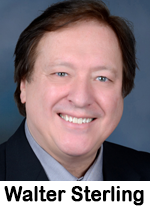 One More Debate Story Out of Philly. We must share this with you. Last night’s spectacular was a bonanza of activity for Audacy’s swing state news/talk giant WPHT (as is this entire election). The station is the home of Walter M Sterling’s idiosyncratic “Sterling Every Damn Night” 9:00 pm – 12:00 midnight. Sterling (a.k.a. Walter Sabo) aired the entire debate followed by probing analysis from a male entertainer, “Donald Trunk,” in addition to “Steven a baker and bakery owner,” “Thea Landen, a smutty book author,” “Celena Ballerina a senior in college” and the station’s real midday host Dom Giordano. For one hour, they discussed how crappy their food and electrical bills are as well as how confusing the debaters were. A caller thanked Thea for her nightly smutty book readings stating, “She reminds me of my wife.”
 Canceled (WOKV-FM, Jacksonville) Talk Radio Host Returns With Political Podcast “Mark Kaye Saves the Republic!”Radio talk show host and Newsmax TV personality Mark Kaye tells TALKERS that he’s launching an entertaining new political podcast, “Mark Kaye Saves the Republic!”
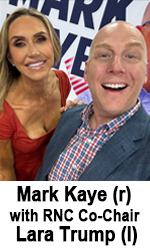 The new daily podcast and livestream promises to deliver fun and informative takes on breaking news and political headlines. Mark approaches the show with his trademark high energy and quick wit to create what he describes as “a cool atmosphere for all his loyal listeners affectionately called Kayetriots.” Kaye states, “I am beyond excited to create entertaining and informative daily content again. Since I was canceled [by WOKV-FM, Jacksonville], my audience has been struggling to find real news and true conservative values on the radio or anywhere else. This is not just another news podcast. It’s an online world where patriotic Americans come together to get the daily information and inspiration they need to keep fighting for this great country. My listeners and I are going to save the republic and we’re going to have a lot of fun doing it!” The show kicks off this week with live coverage from the Presidential Debate in Philadelphia. “Mark Kaye Saves The Republic!” is produced by Kayetriot Media.
 Heidi Harris Inducted Into the Nevada Broadcasters Hall of Fame. After 26 years in radio including stints at KXNT and KDWN in Las Vegas, veteran talk show host Heidi Harris was inducted into the Nevada Broadcasters Hall of Fame this past weekend (9/7). Harris tells TALKERS, “It’s an honor to be recognized by the Nevada Broadcasters Association, which works tirelessly on behalf of the broadcasting community, and awards generous scholarships every year to the next generation of broadcasters.” Harris continues to be a trailblazer presenting “The Heidi Harris Show” as an online streaming and video podcast production.
 Connoisseur Media tells TALKERS about a variety of significant changes for its Western Connecticut news/talk powerhouse, WICC 600 AM, Bridgeport – changes inspired by the closing of Audacy’s WCBS 880 in adjacent New York City.
  WICC is now “The Voice of Connecticut” expanding its reach by simulcasting on 95.9 FM, previously home to classic rock formatted “The Fox.” This strategic move is designed to strengthen WICC’s position as Fairfield County’s premier source for news, talk, and information. A pivotal part of this transformation is WICC’s new affiliation with CBS News, which will provide national news coverage at the top of every hour. Station officials tell TALKERS, this partnership reinforces WICC’s role as the region’s trusted news source, delivering timely and credible information to the communities it serves. “This rebranding and expansion to 95.9 FM represents a pivotal moment for WICC,” stated Keith Dakin, VP of Programming for Connoisseur Media. “The talent on our team, coupled with our new affiliation with CBS News, will allow us to meet the demand for news and talk programming in Southern Connecticut. We’re excited about this next phase and looking forward to serving a much wider geography and bigger audience.” But, as the saying goes, that’s not all. A new local daytime show from 12:00 noon-2:00 pm ET will be added beginning September 30th hosted by Brigitte Quinn who was the creator, host, and managing editor of “Newsline” on WCBS 880. She was the station’s first female morning-drive anchor and later anchored mornings on 1010 WINS. Quinn’s TV career includes roles at MSNBC, NBC News at Sunrise, and Fox News Channel. Quinn remarks, “Ever since my family and I moved back to beautiful Connecticut, I’ve become a faithful WICC listener. I’m delighted to be joining such a great news/talk radio station, ‘The Voice of Connecticut.’” Quinn’s addition brings WICC’s entire daytime lineup local as she joins talk hosts Melissa Sheketoff 5:00 am -10:00 am, Lisa Wexler 10:00 am-12:00 noon and Paul Pacelli from 2:00 pm-6:00 pm. New additions to weekend programming also include Emmy nominee Chef Plum, Mike Cerulli of WTNH, New Haven, and Dave Ruden of the Ruden Report covering local high school sports. The station plans to continue evolving in this direction with one more critical news reporter position to fill. “We invite Fairfield County listeners to tune in to ‘The Voice of Connecticut,’” says Kristin Okesson, SVP of Connoisseur Media Connecticut.
  “Our affiliation with CBS News paired with these exciting changes in programming reinforces our commitment to deliver modern, engaging content and we’re confident that our audiences will appreciate the new ‘voice’ they hear. I’m especially proud that our daytime shows are hosted by four incredibly talented hosts – three of them in particular are outstanding women in their own right.” WICC can be streamed at