Job Opportunity

WBT, Charlotte Seeks News Anchor

107.9 FM WBT, Charlotte’s News Talk is looking for the next great multimedia journalist to join the WBT News Team as a Full-Time News Anchor. If you’re a compelling storyteller on air and on the page, have the ability to deliver the facts beyond the headline, and imgunderstand that there is a critical difference between news reporting and simple dictation, we’d love to hear from you.  What will set you apart? Journalistic objectivity, understanding what makes a news story relatable, the flexibility to cover breaking news whenever it happens and, most importantly, to be a great teammate and collaborator, working with the entire WBTeam of hosts, anchors, reporters, and producers for the benefit of the Charlotte listeners.  If this sounds like you, please upload your resume, air checks and writing samples here.

Industry News

Former KNX, Los Angeles Reporter Rob Archer Joins “95.5 WSB”

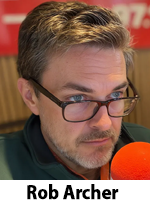
Cox Media Group’s news/talk WSB-AM/WSBB-FM, Atlanta “95.5 WSB” is bringing radio news pro Rob Archer aboard as anchor/reporter. Archer, formerly with Audacy all-news KNX, Los Angeles, begins his new role in September. He posted the following to his blog Archer’s Line: “I’ve written before about how I imgthought my time at KNX would be the capper of my on-air career — that I’d retire from there, as so many other great broadcast journalists had. But it was not to be. I got caught in the churn of staff reductions in June 2025. I stayed busy over the next year. I focused on Archer’s Line and co-hosted podcasts with Jack Messenger and my KNX colleague Charles Feldman. I started a voiceover business and anchored for Remote News Service, providing local newscasts for small- and medium-market stations across the country. I applied for as many radio jobs as I could. But given the state of an industry that was letting far more people go than it was taking on, I didn’t have a lot of hope. But life, like Loki, loves messing with your plans. I awoke one morning to a message about an opportunity — and I grabbed it. I have accepted an anchor/reporter position at 95.5 WSB Atlanta. I’ll be working with my old KNX boss, Ken Charles, beginning next month. See his post to Archer’s Line here.

Industry News

Hubbard Names Moore to Succeed Oxley in DC

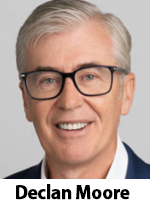
Hubbard | Media That Connects CEO Ginny Hubbard announces that former head of international for Wondery Declan Moore will take over leadership of its Washington, DC operations – including WTOP, Federal News Network and the 2060 Digital – when Joel imgOxley retires at year’s end. Moore says, “I’m honored to have the opportunity to build on the extraordinary legacy Joel Oxley has created here in Washington. WTOP, Federal News Network and 2060 Digital are exceptional brands with deep connections to the communities they serve throughout the National Capital Region. I’m energized by the opportunity to work with the talented teams here to build on those strengths and help these businesses continue to evolve and grow. I’m also enormously excited to join Ginny [Hubbard] and the Hubbard leadership team, whose commitment to impartial, trusted journalism, strong local brands and long-term thinking really resonated with me throughout this process.”

Industry News

Michael Cohen Interviews Trump for WABC Radio Show

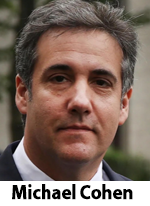
Michael Cohen – President Donald Trump’s former attorney and “fixer” – interviewed the president for his radio show on WABC, New York that will air in its entirety on his Sunday program that airs from 5:00 pm to 6:00 pm. Cohen – who was sentenced to three years in prison for lying to congress and failing to report millions in imgincome testified against Trump in congress and in court. But Cohen says he’s spoken with Trump several times over the past year and the president agreed to do the interview.  WABC says, “The coming-together of these two political heavyweights comes at a particularly intriguing time. Cohen and Trump have been publicly at odds for years, making this unexpected sit-down impossible to ignore. Whatever the answer, Cohen interviewing Trump is sure to generate attention and plenty of questions about what happened to one of the most complicated relationships in modern politics.”

Industry Views

The Algorithm Knows What You Did But It Doesn’t Know Why

img

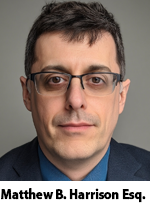
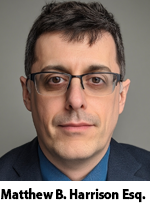
By Matthew B. Harrison
TALKERS, VP/Associate Publisher
Harrison Legal Group, Senior Partner
Goodphone Communications, Executive Producer


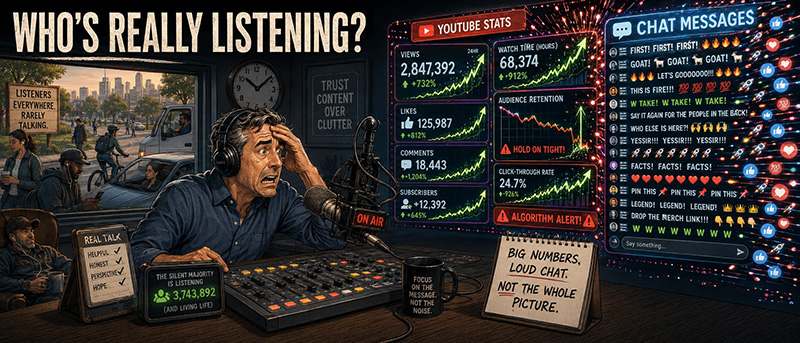
imgA viewer watches the same political clip three times. The platform sees a powerful signal: this person stopped, stayed, and came back. What it cannot reliably know is whether the viewer loved the argument, hated it, was factchecking it, or was showing it to someone else in disbelief. The algorithm knows a viewer watched. It does not necessarily know why. That is why YouTube looks beyond viewing itself to other signals of appeal, engagement, and satisfaction.

That distinction matters to broadcasters because digital analytics can look much more intelligent than they really are. An algorithm can measure behavior with extraordinary precision, but behavior is not motive. PPM taught radio a version of the same lesson. Nielsen’s meter can passively detect exposure to encoded audio, but the resulting audience measurement cannot tell a programmer why someone listened or why audience levels changed.

Livestreaming creates the opposite problem. Instead of too little explanation, the host suddenly gets too much of it. The chat is moving. People are demanding another topic, praising a guest, attacking a caller, or announcing that the segment is dying.

That feedback is valuable, but the people typing are not necessarily representative of the people listening. Radio hosts should already understand this because callers have never represented the entire audience. They represent the portion motivated enough to pick up the telephone. Livestream chat is the same phenomenon at digital speed.

The danger comes when these two imperfect signals reinforce each other. The dashboard says engagement jumped. The chat says, “More of this.” A host can easily conclude that the audience has spoken when what actually happened is that a particularly active portion of the audience became particularly visible.

Good broadcasters have always listened to the audience without surrendering the show to it. Digital tools make that listening faster and more detailed, but they do not eliminate the need for judgment.

The algorithm knows what people did. The chat tells you what some people said. The programmer still has to decide what either one means.

For the larger discussion of ratings, PPM, algorithms and digital distribution, read The Algorithm Is Listening here: https://talkers.com/category/industry-views/

Matthew B. Harrison is a media and intellectual property attorney who advises radio hosts, content creators, and creative entrepreneurs. He has written extensively on fair use, AI law, and the future of digital rights. Reach him at Matthew@HarrisonLegalGroup.com or read more at TALKERS.com.

Industry News

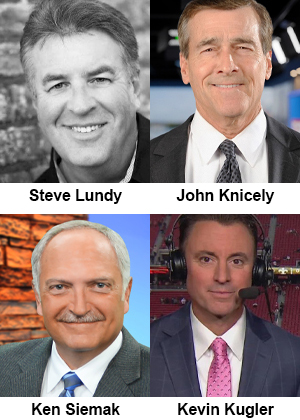
John Knicely, Kevin Kugler, Steve Lundy and Ken Siemek to enter Nebraska Broadcasters Association (NBA) Hall of Fame

Nebraska Broadcasters Association2022 logo

4NBA

The Nebraska Broadcasters Association will induct John Knicely, Kevin Kugler, Steve Lundy and Ken Siemek into the NBA Hall of Fame on Tuesday, August 11, in Lincoln during the NBA Annual Convention. Established in 1972, the NBA Hall of Fame will grow to 127 members with these pending inductees.

From his start as a TV sportscaster through his 34 years as a news anchor on Omaha’s WOWT-TV, John Knicely set a long-term standard for credibility and trust in Nebraska’s most competitive television market before retiring in 2025.

Kevin Kugler has the most extensive play-by-play résumé of any Nebraskan, and he continues scaling new heights on a national level.

In a career approaching 50 years and still counting, Steve Lundy has entertained listeners and served local communities on some of Nebraska’s most legendary radio stations. He got his on-air start in 1977 at KHUB in Fremont, and over the next 23 years, Steve was heard in Omaha on WOW, KOIL, KEFM, KQKQ and KKAR. After four years on Lincoln’s KLIN, Steve joined Omaha’s country music-formatted KXKT in 2004, where he currently serves as co-host of “Steve & Gina in the Morning.”

Over the course of his 44 years on KOLN, Lincoln, and KGIN-TV, Grand Island, meteorologist Ken Siemek led the stations’ weather department through massive technological changes—from handwritten weather symbols and temperature readings to the latest radar and satellite weather-forecasting technology. He retired in 2025.

Industry Views

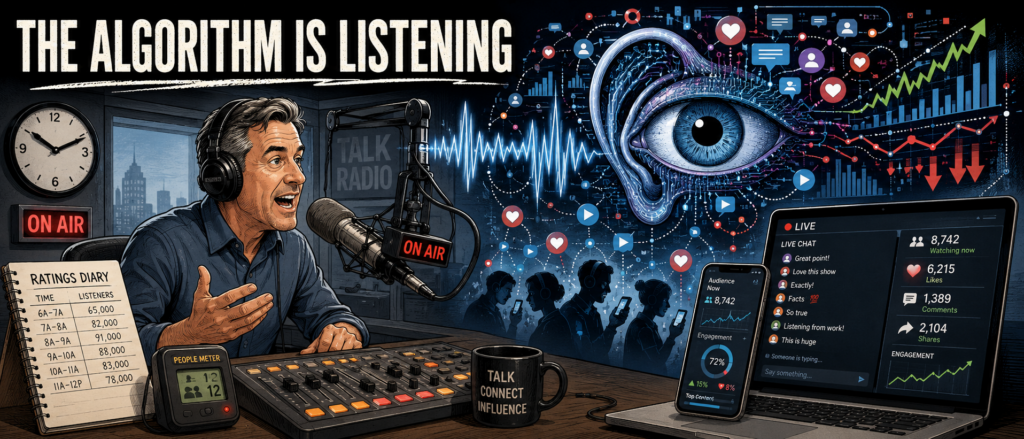
The Algorithm is Listening

1527a63f d481 4de5 8636 2bcf88a23c44

img

By Matthew B. Harrison
TALKERS, VP/Associate Publisher
Harrison Legal Group, Senior Partner
Goodphone Communications, Executive Producer

Radio once measured the audience… now digital platforms use the audience to decide what happens next

Radio programmers have always watched the audience. The difference for programmers today is that the audience can now watch back, respond instantly, influence the show, and determine whether the next person ever receives it.

That is the practical meaning of an algorithm for a broadcaster. It is not a mysterious robot hiding inside the black box of an enigmatic social platform. It is a set of instructions used to make decisions. On YouTube, Facebook, TikTok, Spotify, Twitch, and other services, those instructions help determine which content gets shown, to whom, in what order, and under what circumstances.

Radio has used simpler forms of algorithmic thinking for decades. A music clock is a set of instructions. So is a rule prohibiting two songs by the same artist within a specified period. Or two female vocals in a row. A programmer who schedules news at the top of the hour, traffic twice an hour, and the strongest feature before a commercial break has created a decision system.

Digital algorithms do something more consequential. They do not merely organize the program. They organize the audience around each individual piece of content.

From diaries to PPM

The traditional radio diary asked selected listeners to record what they heard and when they heard it. Nielsen defines the diary as a measurement method in which respondents manually record their listening habits. Those reported habits are then used to estimate listening across a larger market.

The system was necessarily crude. A diary could show that someone reported listening to a station during morning drive. It could not reliably establish whether that person loved the program, ignored it, hated it, stayed because the station was playing in a waiting room, or simply remembered the call letters incorrectly.

Still, the diary produced an enormously valuable number. Ratings influenced advertising rates, station formats, talent contracts, syndication opportunities, and management decisions. The ratings service measured the audience, but the station still controlled the programming and the transmitter.

The Portable People Meter changed the speed and granularity of that feedback. PPM panelists carry a small device that detects inaudible identification codes embedded in participating broadcasts. Instead of relying entirely on a listener’s memory and written entry, the meter passively detects exposure to encoded audio.

That gave programmers something closer to immediate feedback. They could study audience movement within smaller portions of a show, identify apparent tune-out points, compare features, evaluate commercial breaks, and make changes much more quickly.

PPM therefore became the bridge between traditional ratings and algorithmic distribution. The diary remembered the audience. PPM observed the audience more closely. Both still produced information for human beings to interpret.

A programmer could see a decline and decide to shorten a segment. The meter did not shorten it. A consultant could conclude that a feature hurt retention. The PPM system did not prevent tomorrow’s listeners from hearing it.

The algorithm closes that gap.

(more…)
Industry News

Salem’s WNYM, New York (AM 970 The Answer) Teams with Hofstra’s WRHU-FM to Produce Series of 9-11 Tributes

Annie SiddiqueIn an impressive example of the productive synergy that can be generated by the teaming of campus and professional spoken word radio organizations,
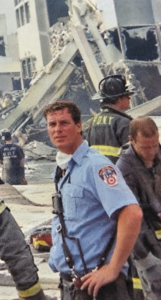
Jim Berghorn

Salem’s WNYM, New York (AM 970 The Answer) is running a series of vignettes collectively titled “Courage, Sacrifice and Commitment” during the months of August and early September, featuring tributes to 9-11 first responders. These short form productions highlight stories of New York City’s heroes and give first-person perspectives on what happened the day of and after 9-11. The stories are being produced by Hofstra University / WRHU-FM student journalist Annie Siddique, who has developed into what has been described by WNYM and WRHU management as a “master interviewer” in organizing and producing this campaign. To sample an episode of the program featuring a profile of retired FDNY Lt. Jim Berghorn, please use player below, or click here.

.

Industry Views

The Advertiser Gave Us an AI Commercial… Isn’t that Enough?

doublewiredaiproblem

imgBy Matthew B. Harrison
TALKERS, VP/Associate Publisher
Harrison Legal Group, Senior Partner
Goodphone Communications, Executive Producer

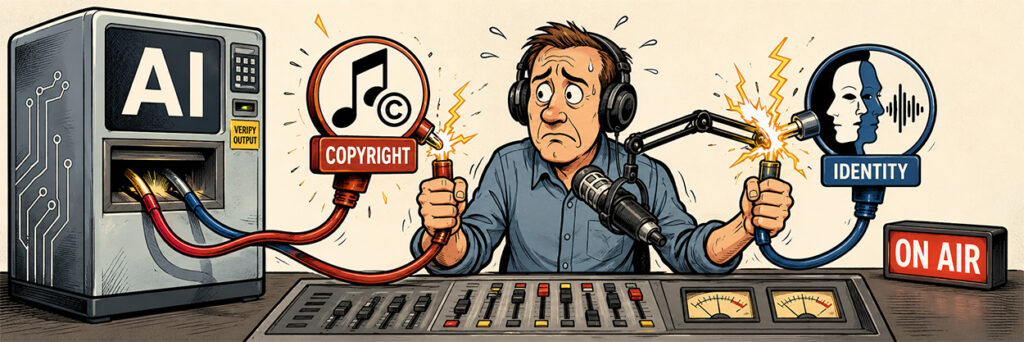
Synthetic audio can turn one clearance problem into two
An advertiser sends a finished commercial to a station. The script came from one AI platform, the announcer’s voice from another, and the music arrived inside the final audio file. The production value is surprisingly good for a dental office. Then someone notices that the announcer sounds remarkably like Matthew McConaughey. He does not say “alright, alright, alright,” exactly, but he says something close enough to make the association obvious.

A conventional infringing commercial may misuse a song, recording, photograph, or written copy. An AI commercial can create the same copyright problem while adding another: the unauthorized commercial use of a recognizable person’s identity. One file can therefore produce two entirely different claims.

Copyright protects original expression, including scripts, music, and sound recordings. It generally does not give anyone a copyright in the sound of a natural voice. That does not make a distinctive voice free for advertisers to imitate.

Tom Waits established the distinction decades before generative AI. After Waits declined to participate in a Frito-Lay campaign, the company used a singer who imitated him in a radio commercial. Waits successfully pursued claims for voice misappropriation and false endorsement. AI now makes that imitation faster, cheaper, and potentially more convincing. Waits v. Frito-Lay⁠

The rights do not travel together 

Clearing the script or music does not clear the voice. Permission from the person whose voice was cloned does not clear protected material that the system may have reproduced. The station needs to ask two questions: Who owns everything in this commercial, and whose identity is doing the selling?

There is another wrinkle. The AI company may possess defenses that do not travel with the finished audio. In Walters v. OpenAI, ChatGPT falsely accused radio host Mark Walters of embezzlement. OpenAI defeated the defamation claim because the recipient encountered warnings that the system could be inaccurate, did not believe the accusation, verified that it was false, and did not republish it. Walters also failed to prove the necessary fault or damages. Walters v. OpenAI⁠ case summary⁠

That ruling did not grant AI companies blanket immunity. It does suggest an uncomfortable result for broadcasters. A provider’s warning that its output requires verification may help protect the provider while making it harder for a station to argue that airing the output without checking was reasonable. The company that generated the problem may have a better defense than the broadcaster that delivered it to the public.

California’s AI Transparency Act, operative August 2, 2026, now requires certain large AI providers to offer detection tools and place provenance disclosures in generated audio, images, and video. Those tools may help identify origin. They do not establish copyright clearance, consent, accuracy, or authority to imitate someone. California AI Transparency Act⁠

Stations should require advertisers to warrant both ownership and permission for identifiable voices or likenesses, backed by indemnification. AI has not replaced the old clearance problem. It can place a second problem beside it, then leave the broadcaster holding both.

Matthew B. Harrison is a media and intellectual property attorney who advises radio hosts, content creators, and creative entrepreneurs. He has written extensively on fair use, AI law, and the future of digital rights. Reach him at Matthew@HarrisonLegalGroup.com or read more at TALKERS.com.

Industry News

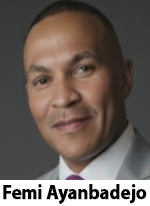
Ravens Super Bowl Champ Femi Ayanbadejo to Host PM Drive Show on “105.7 The Fan”

Audacy’s sports talk WJZ-FM, Baltimore “105.7 The Fan” unveils its newest afternoon drive show, “The Final Drive,” hosted by former Ravens linebacker Femi Ayanbadejo with co-hosts Ken Weinman and Tim Barbalace. “105.7 The Fan” brand manager imgJoe LaCroix says, “Femi’s sports knowledge spans far beyond football, encompassing the entire Charm City sports scene. His fearless opinions and local sports knowledge will complement Ken’s fiery takes and Tim’s sharp insights. We can’t wait for our listeners to experience the next chapter of afternoons with ‘The Final Drive.’” Ayanbadejo’s radio experience began in 2012 with contributions to several programs, including “The Scott Garceau Show,” Ravens game-day radio with Gerry Sandusky, and, most recently, “The Bruce and Femi Show” on “105.7 The Fan.”
Industry Views

Harrison: Don’t Believe that AI Lacks “Heart”

imgTALKERS founder Michael Harrison is this week’s guest on the National Press Club’s official podcast, Update-1, in which he tackles the topic “Predicting the Future of Media Following the Shutdown of CBS News Radio.” Interviewed by noted American University media professor Gemma Puglisi, Harrison addresses such issues as changes in the tenets of journalism and the general shrinkage of radio news. Along the way, he offers his insights into a variety of media and societal topics including the impact of clickbait and what he describes as “the daily dance of affirmation” resulting imgfrom the trend toward news platforms “targeting” audiences for purely marketing purposes. Harrison defends AI from critics who claim the technology lacks “heart” and that audiences will swing back to the “authenticity” being destroyed by AI slop. Harrison makes the case that what counts is the humanity behind the operation of AI which is “only a tool.” He says, “Blaming AI for shallow content is like attributing shoddy novels to the invention of the word processor.” Harrison boldly predicts that AI and modern technology will hasten the “death of Hollywood” as we know it among other insights into the future of news, entertainment, and communications.  Don’t miss this!  To listen to the podcast in its entirety, please click here.


Industry News

Nielsen: Audio Still the Backbone of Podcast Consumption

Nielsen issues the results of data from an analysis of consumers’ consumption of podcasts. The study finds that while more people are seeing video-enabled podcasts, audio remains the absolute foundation of the ecosystem, with 90% of all monthly podcast consumers choosing to listen, while 62% engage by watching. imgOther key findings include: Sports content acts as a unique bridge between listening and watching experiences, drawing the closest parity between listeners and viewers across top genres; Format choice signals entirely distinct consumer mindsets: the highly structured, utility-driven “Pragmatic Listener” versus the entertainment-seeking, visually focused “Interactive Watcher.”; and Conversion mechanics differ by format, with audio consumers acting as direct digital responders and video watchers acting as high-intent brand translators and social amplifiers. See the report here.

Industry News

Sid Rosenberg Among 2026 NYSBA Hall of Fame Inductees

The New York State Broadcasters Association officially announces the 2026 inductees into the New York State Broadcasters Hall of Fame. The induction ceremony will take place at the Rainbow Room in October. This year’s class includes WABC, New York imgmorning drive host Sid Rosenberg. In addition to Rosenberg, this year’s class includes: Bill Ritter – journalist/ anchor – WABC-TV, New York; Rosanna Scotto – journalist/anchor – WNYW-TV (FOX 5), New York City; Dan Miner – station manager – WCKM-FM, WCQL-FM, WWSC-AM & FM, and WDKM-FM, Glens Falls; Pete Cloutier – morning co-host & sales – WCKM-FM, Glens Falls; Chuck Samuels – VP & general manager – WHAM-TV, Rochester (retired); and Bob Krummenacker – VP & General Manager – WBNG-TV, Binghamton (retired).
Industry News TALKERS 2026

TALKERS 2026 Video: “Doing Talk on a Music Station”

img

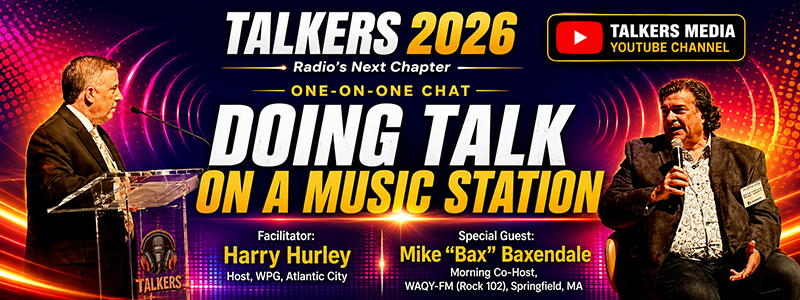
TALKERS continues to post information-laden videos recorded at the TALKERS 2026: Radio’s Next Chapter conference recently held at Hofstra University (6/5). More than 65 speakers participated in the power-packed day’s events. Today’s entry is a one-on-one conversation titled, “Doing Talk on a Music Station,” which explores the diverse world of talk shows programmed on predominantly music-formatted stations. Many of these shows, usually heard in the morning, are on mostly classic rock or adult contemporary outlets, and are a hybrid of general news/talk radio – leaning heavily on social issues – mixed with a component of celebrity gossip, sports, and the hosts’ personal, real-life stories. They are usually comprised of a host and a co-host or simply two equal co-hosts. The special guest in this video is Mike “Bax” Baxendale, the long running co-host of the wildly successful morning show on classic rock station WAQY-FM (Rock 102), Springfield, MA. Facilitating the dialogue is WPG, Atlantic City morning host Harry Hurley.  Baxendale – who is a household name in the Western Massachusetts-Northern Connecticut market – has co-hosted the dominant show for the past 31 years working for a couple of decades with the late John O’ Brien and more recently with Steve Nagle. Don’t miss this! Stay tuned to TALKERS for continuous daily postings of engaging sessions from the 28th installment of the longest running and most important annual talk media industry gathering. To view this presentation in its entirety, please click here.

Industry Views

Monday Memo: Radio’s 2027 Talent Strategy: Destination by Design

By Holland Cooke
Consultant

imgIf your station is outside the top 50 markets, you already know the pressure points. A mature workforce stretched thin. Fewer applicants for on air and production roles – specifically the younger creators who don’t see radio as their first creative outlet. And a competitive landscape where streaming, satellite, and podcasts divert attention with the gravitational pull of a black hole.
But radio can absolutely attract these next-gen creators. We just can’t do it with yesterday’s playbook. In “Future Work World,” Barry Winkless argues that organizations must intentionally design themselves to “excite, entice, and engage” the next generation of talent. He’s talking about the future of work broadly – but his framework fits independent local radio like a blueprint. Especially in medium and small markets, where stations are fighting a two-front war: defending local relevance while competing with global audio giants. Accordingly…

  1. Redesign roles for the “Work Salad” generation.

One of the book’s core ideas is the rise of “work salads” – workers who blend skills, platforms, and creative identities rather than fitting neatly into a single job description. That’s today’s creator economy in a nutshell. For radio, this means offering roles like host+podcaster+social storyteller; or news voice+explainer video creator+local events personality. Younger creators don’t want an airshift. They want a mix – a portfolio of creative outputs. Stations that offer that mix will win talent that would otherwise bypass radio entirely.

  1. Make your station a Designed Destination.

Winkless’ “Destination Designer” mindset recommends environments where people want to be, because the place itself inspires them. For radio, this means a workplace that feels flexible, fluid, and creatively alive. You don’t need a big market budget to create a big market feel. You need intentionality and a willingness to break from “how we’ve always done it.” Turn a legacy operation into a future ready talent magnet.

  1. Use AI the way creators already do.

In one of the book’s fictional “jumps,” Winkless introduces the “cowerka,” an AI assistant that handles tasks, anticipates needs, and frees humans to focus on what only humans can do. AI can help prep shows, suggesting ways to localize trends and topics. Nextgen creators already use AI as a collaborator. Stations that embrace this reality will feel familiar – and attractive – to them.

  1. Sell the one thing no competitor can match: Local Reach

Streaming platforms offer scale. Podcasts offer intimacy. Satellite offers variety. Only radio offers local presence at scale.

Creators want audiences – podcasters hunger for what radio has: cume. Broadcast radio can give them something TikTok can’t: instant legitimacy in a real community. As I have explained here previously, we position client stations as reach engines: Instead of asking creators to serve radio, radio serves creators.

  1. Tell a Better Story About Who You’re Becoming

Winkless’ “Next Level Storytelling” chapter cautions that your recruitment story can’t be: “We need someone to do afternoons.” Instead: “We’re building the next chapter of local media, and we want creators who want to shape it.”

Creators don’t join job descriptions. They join stories.

The Bottom Line

Local radio doesn’t need to out tech the tech giants. It needs to out human them. By redesigning roles, modernizing culture, embracing AI, and positioning radio as a creator platform – not just a broadcast outlet – stations can attract the next generation of talent that will keep them relevant, resilient, and indispensable.

Your RIGHT NOW opportunity: As fill-in voices cover for vacationing full-timers, you can preview 2027 talent options. To help them smooth-out any rough edges – and assess how well they take direction – here are 12 Tips for the guest-hosts who are not career broadcasters and don’t share our second-nature performance routines.

Holland Cooke (HollandCooke.com) is a consultant working the intersection of broadcasting and the Internet. Follow HC on Twitter @HollandCooke and connect on LinkedIn

Industry News TALKERS 2026

TALKERS 2026 Video: “Programming News/Talk Radio”

img

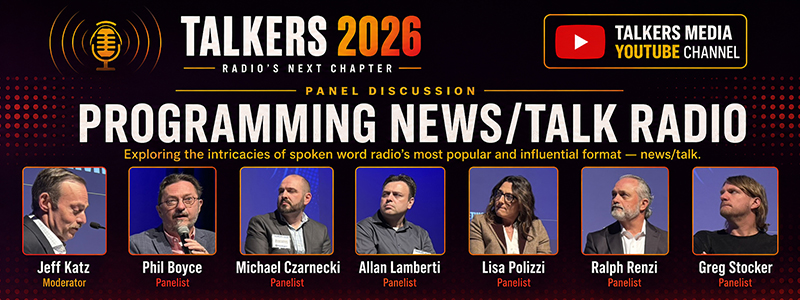
TALKERS continues to post a plethora of videos recorded at the TALKERS 2026: Radio’s Next Chapter conference recently held at Hofstra University (6/5). More than 65 speakers participated in the power-packed day’s events. Today’s entry is a panel discussion titled, “Programming News/Talk Radio,” which explores the intricacies of spoken word radio’s most popular and influential format – news/talk.  Moderated by WRVA, Richmond afternoon star, Jeff Katz, the panel includes (in alphabetical order): Phil Boyce, senior VP, Salem Radio Network, Salem News Channel, Salem Podcast Network; Michael Czarnecki, program director, WFEA, Manchester, NH; Allan Lamberti, program director, WICC, Bridgeport, CT; Lisa Polizzi, brand manager, WBEN-AM, Buffalo; Ralph Renzi, CEO, Newsmax Radio; and Greg Stocker, brand manager, WPHT, Philadelphia. Stay tuned to TALKERS for continuous daily postings of engaging sessions from the 28th installment of the longest running and most important annual talk media industry gathering. To view this presentation in its entirety, please click here.

Industry News TALKERS 2026

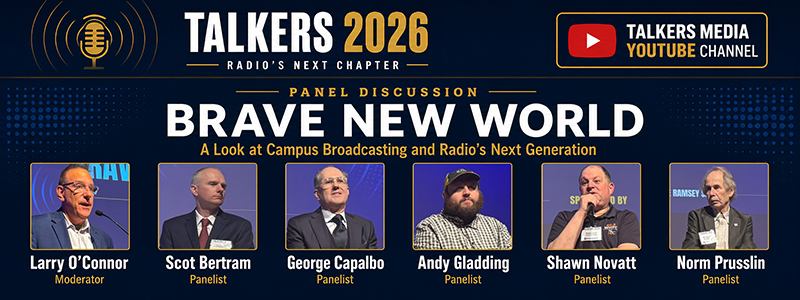
TALKERS 2026 Video: “Brave New World” – A Look at Campus Broadcasting and Radio’s Next Generation

img

TALKERS continues to post a motherlode of videos recorded at the TALKERS 2026: Radio’s Next Chapter conference recently held at Hofstra University (6/5). More than 65 speakers participated in the power-packed day’s events. Today’s entry is a panel discussion titled, “Brave New World,” which explores the future of radio by presenting an informed overview of what’s happening in campus broadcasting. Moderated by Salem Radio Network and WMAL, Washington, DC syndicated star, Larry O’Connor, the panelists include (in alphabetical order): Scot Bertram, GM, WRFH, Hillsdale College; George Capalbo, VP / chief technical officer, Backbone Networks; Dr. Andy Gladding, chief engineer, Salem Media of New York / chief engineer, WRHU, Hofstra University; Shawn Novatt, director, 90.3 WHPC, Nassau Community College / VP, conference & community colleges, Intercollegiate Broadcasting System;  and Norm Prusslin, founder, advisor, WUSB-FM, Stony Brook University. Stay tuned to TALKERS for continuous daily postings of engaging sessions from the 28th installment of the longest running and most important annual talk media industry gathering. To view this presentation in its entirety, please click here.

Industry News TALKERS 2026

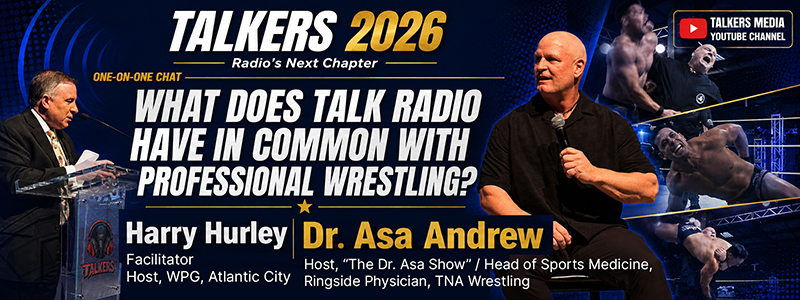
TALKERS 2026 Video: “What Does Talk Radio Have in Common with Pro Wrestling?”

img

TALKERS continues to post a treasure chest of videos recorded at the TALKERS 2026: Radio’s Next Chapter conference recently held at Hofstra University (6/5). More than 65 speakers participated in the power-packed day’s events. Today’s entry is a spellbinding one-on-one presentation titled, “What Does Talk Radio Have in Common with Pro Wrestling?”  The facilitator is WPG, Atlantic City morning host Harry Hurley.  The special guest is the one and only Dr. Asa Andrew.  “Doctor Asa” – a multimedia star – is the host of his own nationally syndicated health and wellness talk radio show. In addition, he is the head of medicine and ringside physician for TNA professional wrestling, as well as an occasional wrestler himself. Hurley and Andrew take a deep dive into the theatrical aspects of presentation and storytelling that talk radio and pro wrestling have in common – and the result is nothing short of fascinating. Stay tuned to TALKERS for continuous daily postings of engaging sessions from the 28th installment of the longest running and most important annual talk media industry gathering. To view this presentation in its entirety, please click here.

Industry News TALKERS 2026

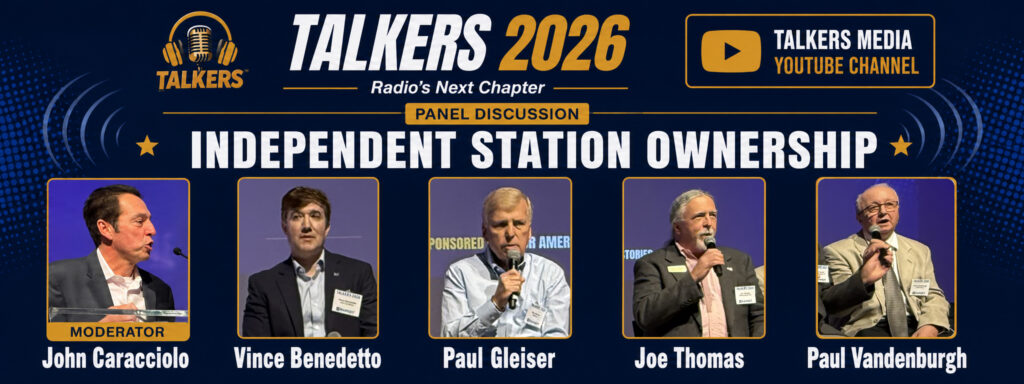
TALKERS 2026 Video: Panel Discussion – “Independent Station Ownership”

IndependantStationOwners
TALKERS continues to post a tsunami of videos recorded at the TALKERS 2026: Radio’s Next Chapter conference recently held at Hofstra University (6/5). More than 65 speakers participated in the power-packed day’s events. Today’s entry is an enlightening panel discussion titled, “Independent Station Ownership.”  The moderator is John Caracciolo, founder / CEO, JVC Broadcasting. Panelists include Vince Benedetto, founder / CEO, Bold Gold Media Group;  Paul Gleiser, owner / operator, KTBB, Tyler, TX; Joe Thomas, co-owner / morning host,  WTON, Staunton-Harrisonburg, VA; and Paul Vandenburgh, owner / morning host, WGDY, Albany, NY. The discussion covers a candid exploration of the challenges and solutions facing independent station and group operators at this point in the evolution of the industry.  It presents a cautiously optimistic but realistic view of radio and station ownership as a going concern. Not to be missed! Stay tuned to TALKERS for continuous daily postings of engaging sessions from the 28th installment of the longest running and most important annual talk media industry gathering. To view this presentation in its entirety, please click here.

Industry News TALKERS 2026

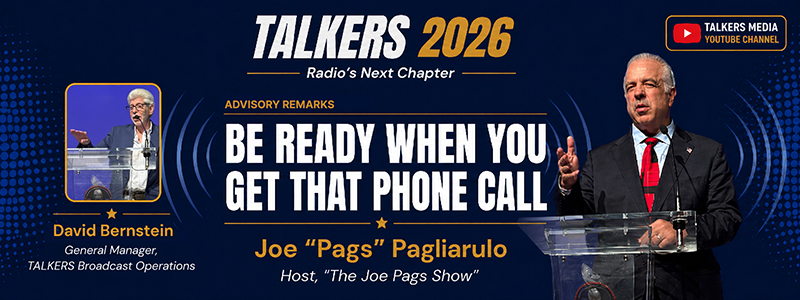
TALKERS 2026 Video: Joe Pags Advises “Be Ready When You Get That Call”

img

TALKERS continues to post a cornucopia of videos recorded at the TALKERS 2026: Radio’s Next Chapter conference recently held at Hofstra University (6/5). More than 65 speakers participated in the power-packed day’s events. Today’s entry is an advisory message from Compass Media Networks syndicated talk radio star Joe “Pags” Pagliarulo titled, “Be Ready When You Get That Call.” Introduced by programming legend David Bernstein, Pags advises radio broadcasters to be ready to take advantage of all the marvelous technology available to continue broadcasting independently on a moment’s notice when you get the dreaded call from your station or platform claiming that “budget cuts” are forcing their hand to drop your show. Don’t miss this informative and inspirational address! Stay tuned to TALKERS for daily postings of engaging sessions from the 28th installment of the longest running and most important annual talk media industry gathering. There’s plenty more to come next week. To view this presentation in its entirety, please click here.

Industry News TALKERS 2026

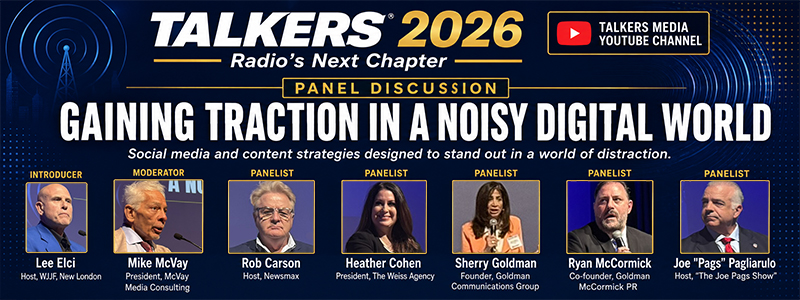
TALKERS 2026 Video: Panel Discussion – “Gaining Traction in a Noisy Digital World”

Gaining Traction copyTALKERS continues to post a treasure trove of videos recorded at the TALKERS 2026: Radio’s Next Chapter conference recently held at Hofstra University (6/5). More than 65 speakers participated in the power-packed day’s events. Today’s entry is an extremely informative panel discussion full of takeaways titled, “Gaining Traction in a Noisy Digital World.” The featured speakers include introducer Lee Elci, host, WJJF, New London; moderator Mike McVay, president, McVay Media Consulting; and panelists (in alphabetical order) Rob Carson, host, Newsmax; Heather Cohen, president, The Weiss Agency; Sherry Goldman, founder, Goldman Communications Group; Ryan McCormick, co-founder Goldman McCormick PR; and Joe “Pags” Pagliarulo, host, “The Joe Pags Show.” Take a deep dive into the complicated world of social media and generating content designed to get noticed in a world of distraction. Don’t miss this! Stay tuned to TALKERS for daily postings of engaging sessions from the 28th installment of the longest running and most important annual talk media industry gathering. To view this dynamic discussion in its entirety, please click here.

Industry Views

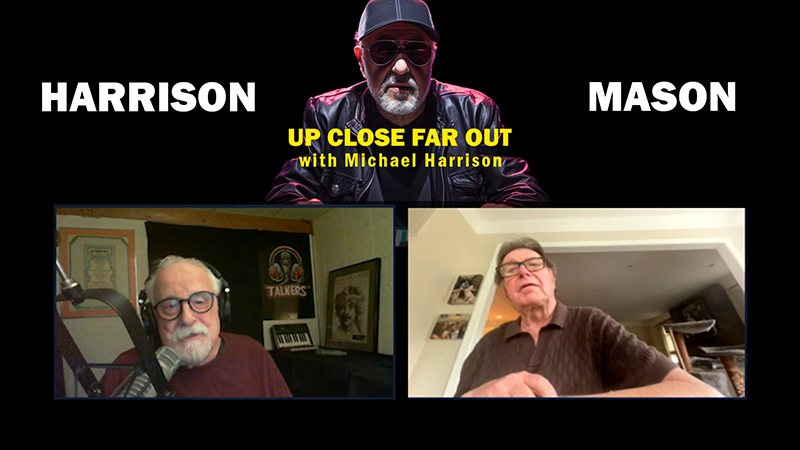
Former CBS Radio Head Dan Mason Guests on TALKERS Podcast – Discusses New Memoir, Colorful Career, Biz Philosophy, and the State of Radio

img

Dan Mason, former president / CEO of CBS Radio, is this week’s special guest on the TALKERS video podcast, “Up Close Far Out.”

Podcast host Michael Harrison and Mason engage in a robust conversation about radio prompted by the release of Mason’s new book, FEARLESS: The Life and Times of a Media Maverick.  All profits generated by the sale of the memoir are being donated to the Broadcasters Foundation of America – the non-profit organization that helps those in need in the radio and television industries that Mason serves as chairman emeritus.

Mason is one of the most influential radio broadcasters of the modern era.  As head of CBS Radio from 2007 to 2015, he oversaw all aspects relating to the company’s portfolio of 117 stations across 26 markets, including all the top 10. In a prior stint at CBS Radio, he held the presidency from 1995 to 2002.  In addition to his roles at CBS, he advised and managed a number of other major broadcast organizations including serving as president of Westinghouse’s Group W Radio in the early 1990s

In 2016, Mason was inducted into the Radio Hall of Fame and, in 2022, into the Broadcasting and Cable Hall of Fame. He was a member of the board of directors of the National Association of Broadcasters, which presented him with the 2012 National Radio Award for outstanding leadership within the radio industry.  Michael Harrison states, “Dan Mason was one of the major leaders who guided radio from the analog to the digital era.”

To view this conversation in its entirety, please click here.

Industry News TALKERS 2026

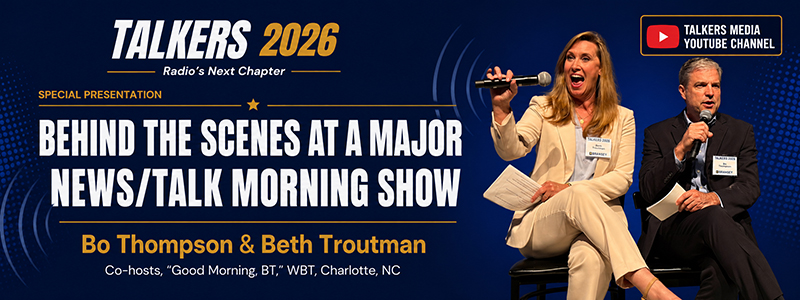
TALKERS 2026 Video: Special Presentation – “Behind the Scenes at a Major News/Talk Morning Show” – Spotlight on WBT’s Bo Thompson & Beth Troutman

img

TALKERS continues to post a treasure trove of videos recorded at the TALKERS 2026: Radio’s Next Chapter conference recently held at Hofstra University (6/5). More than 65 speakers participated in the day’s events. Today’s entry is an informative and uplifting presentation titled, “Behind the Scenes at a Major News/Talk Morning Show.” The featured speakers are the wake-up duo of the highly successful “Good Morning BT” show at the legendary WBT, Charlotte – Bo Thompson & Beth Troutman. The engaging “BT” pair provide candid insights into the mechanics and chemistry that go into the creation of a modern era news/talk morning show and the very nature of the two-host paradigm. Don’t miss this! Stay tuned to TALKERS for daily postings of sessions from the 28th installment of the longest running and most important annual talk media industry gathering. To view this dynamic discussion in its entirety, please click here.

Industry News TALKERS 2026

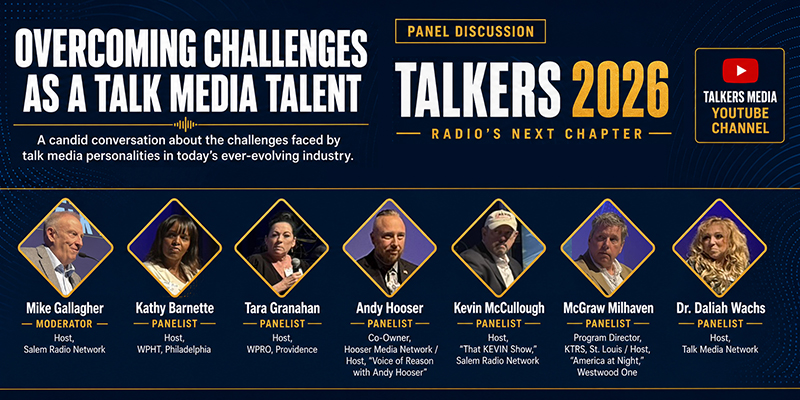
TALKERS 2026 Video: Panel Discussion – “Overcoming Challenges as a Talk Media Talent”

img

TALKERS continues to post videos of sessions recorded at the TALKERS 2026: Radio’s Next Chapter conference recently held at Hofstra University (6/5). More than 65 speakers participated in the day’s events. Today’s entry is a fascinatingly candid panel discussion titled, “Overcoming Challenges as a Talk Media Talent.” Moderated by Salem Radio Network syndicated host, Mike Gallagher, the panelists include (in alphabetical order): Kathy Barnette, host, WPHT, Philadelphia; Tara Granahan, host, WPRO, Providence; Andy Hooser, co-owner, Hooser Media Network / host, “Voice of Reason with Andy Hooser;” Kevin McCullough, host, “That KEVIN Show,” Salem Radio Network; McGraw Milhaven, program director, KTRS, St. Louis / host, “America at Night,” Westwood One; and Dr. Daliah Wachs, host, Talk Media Network. The fast-paced conversation focuses on a wide variety of issues faced by talk media personalities in the ever-evolving landscape of today’s turbulent industry. Stay tuned to TALKERS for daily postings of sessions from the 28th installment of the longest running and most important annual talk media industry gathering. To view this dynamic discussion in its entirety, please click here.

Industry News

Dennis Malloy Returns to New Jersey 101.5 Middays; Eric Johnson Back in Management Seat

Less than a year ago, Dennis Malloy (right) retired from Townsquare Media’s WKXW, Trenton “New Jersey 101.5” where he had co-hosted the midday show with Judi Franco (left) for almost 30 years. imgNow, the station announces that Malloy is returning to the station on July 13 to resume his role as co-host of the “Dennis & Judi Show.” This change doesn’t put Franco’s current co-host Eric Johnson out on the street. The former, longtime “New Jersey 101.5” program director is returning to management as operations manager and program director. He will serve as a fill-in talk host on the station and will spin records duringimg the station’s weekend music programs. Johnson says, “So here is where we are. Dennis and Judi are back together on July 13. I am moving into a role that lets me put 48 years of experience to work shaping what New Jersey radio sounds like across three markets. And I will still be here, writing about this state I have loved my whole life, and showing up on the air when you need a familiar voice.”