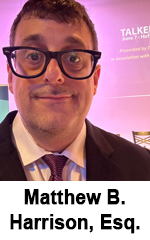
By Matthew B. Harrison
TALKERS, VP/Associate Publisher
Harrison Legal Group, Senior Partner
Goodphone Communications, Executive Producer
 As the practice of “clip jockeying” becomes an increasingly ubiquitous and taken-for-granted technique in modern audio and video talk media, an understanding of the legal concept “fair use” is vital to the safety and survival of practitioners and their platforms.
When assessing fair use in audio media, courts closely examine the “nature of the copyrighted work,” especially focusing on whether the work is factual or creative, and published or unpublished. Factual content, such as news reports or data, is more likely to be seen as fair use material, as it’s in the public interest to keep factual information accessible. Creative works, like music, fiction, or original performances, often enjoy stronger protection because they embody the creator’s unique expression and should be compensated accordingly.
Unpublished interviews or speeches. When audio content includes unpublished material – such as a speech or interview that hasn’t been publicly released – courts typically approach it with heightened caution. For example, if a podcast includes clips from an unpublished interview with a politician to enhance commentary, courts might scrutinize this more heavily than they would a published work, as the speaker retains significant control over whether and how the content reaches the public.
Case study insight: Salinger v. Random House (1987). The landmark case Salinger v. Random House highlighted how unpublished works generally receive stronger copyright protection. In this case, the use of unpublished letters in a biography was ruled as infringing, emphasizing that unpublished materials hold a unique status in copyright law. If a podcaster today were to use a similarly unpublished interview with a public figure without significant commentary or transformation, they might face greater legal challenges.
Redefining “published” in the digital era. With digital platforms, the meaning of “published” is evolving. Traditionally, a work was deemed “published” when made available for sale, license, or public distribution. Now, sharing content online, even in a limited way – such as within a closed social media group or private online forum – raises questions about whether the content should be considered published. Courts are increasingly aware that limited digital sharing doesn’t necessarily reduce a work’s unpublished protections, but extensive online distribution might.
Modern considerations of online sharing. Courts today analyze factors like control over access and the sharing platform’s nature. For instance, an audio clip shared in a restricted forum might retain its unpublished protections, while a widely posted clip could lose some of those protections. Additionally, when creators post content on platforms like Instagram or YouTube before officially “publishing” it elsewhere, courts may take the creator’s intent and distribution scope into account when determining the content’s legal status.
As online platforms reshape how creators distribute their work, they also impact fair use, pushing courts to reinterpret what it means for a work to be “published.” This evolving understanding means that copyright protections depend not only on whether a work is accessible but also on the level of control over its distribution, especially for audio content.
Media attorney, Matthew B. Harrison is VP/associate publisher, TALKERS; Senior Partner, Harrison Legal Group; and executive producer, Goodphone Communications. He is available for private consultation and media industry contract representation. He can be reached by phone at 724-484-3529 or email at Matthew@HarrisonLegalGroup.com


 Baltimore Public Media and WYPR 88.1 FM, announce the appointment of Taylor Holbrooks as the new “Morning Edition” host (12/2). The station issued a statement saying: “Holbrooks’ extensive career in public radio, combined with her commitment to storytelling, makes her a dynamic addition to the WYPR team and a voice that will resonate with listeners each morning.”
 She earned both her bachelor’s and master’s degrees in media and journalism from the University of North Carolina, establishing a strong foundation in impactful reporting and community engagement. “We are thrilled to welcome Taylor to the WYPR family,” said Craig N. Swagler, president/GM, Baltimore Public Media. “Her vibrant energy, thoughtful storytelling, and commitment to community will enhance our programming and strengthen our connection with our listeners.
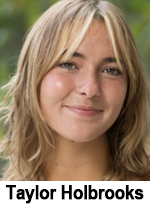 Taylor’s approach to journalism will bring new energy to our mornings, setting a meaningful tone for WYPR’s morning broadcasts and enriching the listening experience for our audience.” Holbrooks will officially begin her role at WYPR today (12/3) with her first on-air broadcast scheduled for late December.

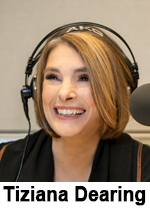 WBUR, the leading public radio station in Boston, has named Tiziana Dearing as host of its “Morning Edition” show beginning September 18. Dearing is a familiar voice to the station’s large, loyal audience, currently hosting the midday show, “Radio Boston.” In an article published on the station’s website, it was reported that in an internal announcement yesterday (8/28), WBUR CEO Margaret Low praised Dearing as a “singular talent – an extraordinary host with deep ties to this city and region.” Dearing states she has loved hosting “Radio Boston” and now looks forward to the opportunity to “meet a huge swath of Greater Boston as they get up and start their day.” She said, “It’s a tremendous privilege and it’s a tremendous responsibility.” The transition at one of Greater Boston’s most listened-to radio shows follows the departure of Rupa Shenoy, after she was unable to reach an agreement with the station this summer to extend her contract. Before that, Bob Oakes led the show for nearly three decades. The program features news, commentary and interviews with local, regional, and national officials and newsmakers. An example of the power of public radio, WBUR has jockeyed for first place in the 6:00 am to 9:00 am time slot this year with WBZ-FM (98.5 The Sports Hub) among the prized 25-54 age demographic. (Photo by Li Linder.)
 acquisition since its founding in 2022. Additionally, The Recombobulation Area founder Dan Shafer is joining Civic Media as political editor. Civic Media says, “The Recombobulation Area has thousands of subscribers, has been read in 50 states and 66 countries and, to date, has reached more than 1.5 million readers. The publication has won 13 Milwaukee Press Club Excellence in Journalism awards in four years for opinion writing, feature stories, multi-story coverage, and public service journalism. Shafer has been active as a radio personality as a regular guest on Civic Media’s ‘Matenaer on Air’ and several other shows.” Civic Media CEO Sage Weil comments, “Dan Shafer and The Recombobulation Area exemplify the type of thoughtful, in-depth, and locally focused reporting that is so important to Wisconsin. We can’t wait to bring his voice to the rest of the Civic Media network, both on and off the air. It is local journalism, with an emphasis on local issues and an understanding of what is important in local communities, that will rebuild trust in our media ecosystem and, ultimately, our democracy.”
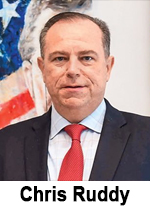
 investors are defined by the Securities and Exchange Commission’s Rule 501(a) as individuals with a net worth greater than $1 million – excluding their primary residence – or incomes in excess of $200,000 in the last two years with the expectation of the same in the current year – or $300,000 with a spouse.) Last month, Newsmax announced that it would seek to become a public company later in 2024 or in early 2025 with a listing on the NYSE or Nasdaq. In preparation for this contemplated public offering, Newsmax has launched a private placement offering seeking to raise up to $225 million. Ruddy states, “We are excited to connect with the tens of thousands of investors nationwide who have already shown interest in investing in Newsmax. There is much to be enthusiastic about Newsmax, including significant growth in our audience, a surge in interest in conservative media and our expanding portfolio of platforms and distribution. Now more than ever — especially in this election year of 2024 — America needs Newsmax. We look forward to sharing more details with everyone who tunes in to the webinar.”
 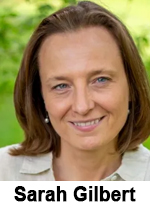 Former Chicago Council On Global Affairs president/chief content officer Sarah Gilbert is appointed president/chief executive officer of WAMC
 Radio plans to reduce its workforce by 12% due to a “free fall in the advertising market.” The source is a memo to staffers from NYPR CEO LaFontaine Oliver. The story goes on to note that the organization employs about 340 full- and part-time workers at WNYC, classical WQXR, and the Gothamist news site.
 news programming. The company is launching a classical network that will air on five signals in the region as well as online. NEPM president Matt Abramovitz says, “These moves position NEPM to better serve western Massachusetts with journalism and conversations that create connections across our wonderfully diverse communities. That investment in local storytelling will also fuel upcoming multi-platform initiatives to reach new, diverse audiences. At the same time, we are bringing a full-time classical service to the region.”
 by more than 2 million people nationwide on a weekly basis. “The World” executive producer Dan Lothian says, “We’re delighted to welcome people from Florida, Wisconsin, Nevada, Ohio, Iowa, New York, Michigan, Illinois, and Kansas to the hundreds of communities listening to The World’s global coverage. As we reach this exciting audience milestone, we remain committed to bringing all our listeners nuanced coverage of the most critical global issues of the day, fueling informed conversations about international affairs.”
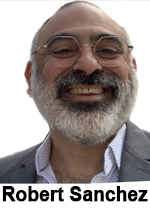 Nashville Public Radio, which includes WPLN “News 90.3” (and triple A WNXP), appoints Robert Sanchez as its chief operating officer. Nashville Public Radio president/chief executive officer Steve Swenson comments, “Rob brings a wealth of experience and expertise to help us as we continue our rapid growth to expand our public service to Nashville and Middle Tennessee. His extensive background in both news and music programming is unique in our industry.” Sanchez notes, “I’m grateful to Steve Swenson and the board of directors for entrusting me to help lead the many digital and audio services Nashville Public Radio offers. I’m invigorated to join an organization that functions at such a high level of public service and community engagement.” For the past five years, Sanchez was vice president of news for iHeartMedia Boston news -news/talk hybrid WBZ-AM and iHM’s northeast regional news director. He previously was director/news and programming for Washington, DC’s WNEW-FM “All News 99.1”; assistant news director of New York all-news WCBS-AM; and programming/operations manager for Los Angeles’ KBLA “1580 Talk Radio.” Among persons 6+ in Nielsen Audio’s May 2023 survey period, WPLN ranks #14 and is trending 2.8 – 2.9 – 3.3 (March – April – May, 6+).
 from the Fiserv Forum in Milwaukee. FOX News Media president and executive editor Jay Wallace comments, “We are extremely proud to have Bret and Martha moderating the first debate of the 2024 presidential election season as Americans learn more about the candidates ahead of exercising their constitutional right to vote.”

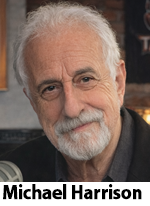 “Throughout its 36-year history of service to the talk radio and associated talk media industries, TALKERS has maintained a strict policy of non-partisanship in its coverage of the field and its players. However, the single ideological orthodoxy practiced by TALKERS through this period has been uncompromising support of the First Amendment – the prime principle and foundation upon which all American freedoms and values are built. Over the years, we have bestowed our prestigious Freedom of Speech Award upon a wide variety of broadcasters from all ends of the political spectrum, and we have gone to bat in support of hosts, stations and networks – popular and otherwise, Democrat and Republican, liberal and conservative – when under fire from presidents and other governmental forces determined to quell that fundamental right. For the sake of our industry and our country, we stand in protest of the current White House press ban imposed against our colleagues and strongly encourage all practitioners of American talk media, regardless of political persuasion, to unify in opposition to this egregious aggression against our fundamental right to fulfill our core duty and promise to the people of our nation.”
 include: 1) Commercial stations produce news at a notably higher rate than non-commercial stations (65.7% versus 62.6%), though the commercial figure fell nearly 10 points from last year while non-commercial stations edged up slightly; 2) Locally owned stations are now nearly 40% more likely to air news than non-locally owned stations; 3) The typical (median) amount of weekday local news rose to 50 minutes, up 10 minutes from last year, though average minutes swung sharply depending on market size – major markets saw an enormous drop in average weekday minutes, which researchers attribute to unusual data the prior year rather than a real decline, while large and medium markets saw increases.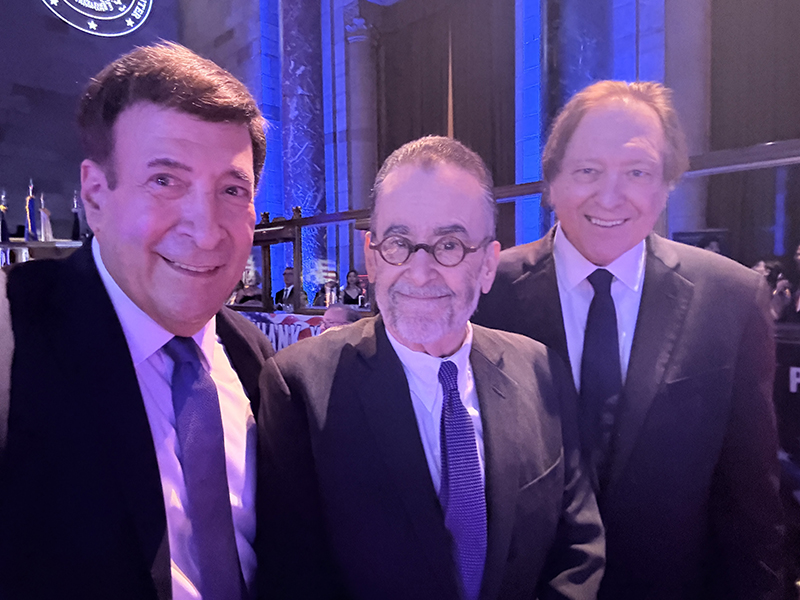
 WABC Radio brought together broadcasting legends, entertainers, civic leaders and political figures Friday night at Cipriani 42nd Street for its 9/11 & Freedom 250 Gala, commemorating 25 years since the September 11 attacks while also recognizing America’s 250th anniversary.
 keep his interview with a Senate candidate off the air shows just how far this Administration’s campaign of censorship and control has gone. This is now the second time in a matter of months that a late-night host has disclosed they had to bury an interview because of FCC intimidation, and there is no way to know how many other editorial decisions across the country have quietly been shaped by this same pressure. No host, local affiliate, or network should have to weigh federal retaliation before booking a guest for a newsworthy interview. Any attempt to pressure broadcasters into self-censorship undermines both press freedom and the public’s right to hear from candidates in their communities seeking public office.