

New York Radio Team Finds a Home in Cape Town
By Dr. Andrew Gladding, EdD
Chief Engineer
WMCA / WNYM, New York
The power of broadcast radio stems from its genesis, which is the use of audio technology and storytelling to transmit messages to large audiences. As industry professionals, we are all acquainted with the power and reach that our trade provides. However, all stories must begin with the spark of an idea. In the case of the curious collaboration between a college radio station in New York and a community radio station in South Africa, this idea started with a simple conversation.
The relationship between 88.7FM WRHU Radio Hofstra University and 89.5FM Bush Radio in Cape Town South Africa began purely as a matter of proximity. In the winter of 2018, I happened upon Bush Radio while in South Africa while on a family vacation. Meeting the passionate broadcasters at Bush Radio has resulted in a fruitful broadcast collaboration spanning six years and many exchanges of audio, information and support between our two broadcast organizations. Students at WRHU in New York, WRCT in Pittsburg and members of Bush Radio co-produce a weekly show called “The 1World Community Radio Show,” which features interviews and music from around the world. WRHU’s Ricky Hubert, WRCT’s Cody Hmelar and Bush Radio host Lydia Marwanqana connect weekly to create a truly unique program that provides a world stage for young, aspiring talent. The show has become a centerpiece of programming for both stations and an example of how stations across the globe can work together to create engaging, community focused audio content. It has also allowed staff members from both stations to develop insight into each other’s cultures and communities.

Pictured above (from l-r) are: Sturgeon Records President David Chapman, Salem NY Chief Engineer Andy Gladding, Bush Radio engineer Renato Van Schalkwyk, WRHU general manager John Mullen, Bush Radio managing director Brenda Leonard, Bush Radio host Jasnine Roberts, WCWP general manager Dan Cox and WKZE “Night Shade” host Paul Higgins at the Bush Radio Studios in Salt River, Cape Town.
In the fall of 2024, members of Bush Radio came to New York City and Washington DC to cover the presidential elections. The purpose of the trip was to find new ways to combat journalistic misinformation. The visit exposed Bush Radio staff members to American journalistic values, broadcast operational practices provided the international broadcasters with an up-front look at the US democratic process in action.
In February of this year, In the spirit of maintaining and strengthening our broadcast partnership, five members of New York radio and audio media , including myself, traveled to Cape Town to see how the Bush Radio folks used their FM reach and power to serve their community. The goals of this part of the exchange were to deepen our understanding of South African media, operations, practices and workplace culture. We went into this journey with our minds and hearts wide open, ready to see how the craft that we know and love was practiced on the other side the world.

Pictured above is Andy Gladding working with Bush Radio engineer Renato Van Schalkwyk to install Comrex hardware in the Bush Radio Air Studio.
The results of this visit were eye opening. During our visit to Cape Town, we observed several similarities between our stations in New York and our South African counterparts. The Bush Radio staff was extremely dedicated to their station and took great pride in serving their community. They used their centrally located studies as both a broadcast center and training facility, with a thriving mentorship and intern program. We also noticed that they followed almost identical practices and standards as we do in the USA, ranging from technical specifications for broadcast engineering to maintaining programmatical integrity. Even the energy and excitement among the staff in the studios and reporting from the field was comparable to any well-run US broadcast entity. This is mainly due to the fact that the folks who run Bush Radio, specifically Managing Director Brenda Leonard and Program Director Adrian Louw, execute a comprehensive and extensive training and operational workflow at the station. Bush Radio holds the proud distinction of being the first licensed community radio station in South Africa, which was achieved with great effort and sacrifice during a time when the practice of community radio was non-existent in the country. Therefore, the management is very observant and powerful of the weight that they carry and this respect is passed along to the station members.
We also noticed some stark differences. Due to the relatively young nature of the South African democracy, there appeared to be a deeper connection between station and community. Bush Radio is involved in many different aspects of Cape Town governance, culture and outreach and this is reflected in their on-air product and station ethos. We also observed that many members of the general public were familiar with the station and proudly considered themselves to be regular listeners and supporters. The station was closely intertwined within the fabric of the community, which is both wide and diverse.
We also noticed that there was an intrinsic willingness between Bush and other community stations to work together. During our visit, we had the opportunity to visit a number of stations in communities around the Western Cape region, including Zibonele FM and The Voice of the Cape. We heard the term “partnership” and “sister station” during our visit many times, which demonstrated a visible willingness between teams at different organizations to work together and collaborate. I personally believe that this positive attitude for partnership and outreach has been a driving force in the successful collaboration WRHU has enjoyed with Bush Radio.
During our visit, the New York contingent felt this energy and openness, which in turn motivated us to jump into the spirit of the occasion. I personally worked with the Bush station engineering team on some facility maintenance and technical improvements, while other members of the crew lent their wisdom and knowledge to the venture. Laura Schaffer, the General Manager of Salem Media of New York had sent us down with a “broadcasters care package,” comprised of surplus equipment and spare parts from New York. The staff at Bush Radio was happy to receive the gear and began using it almost immediately.
The exchange of knowledge was not limited to technical engineering. WRHU’s John Mullen and Dan Cox ran a workshop on sales, marketing and workflow, while Sturgeon Records owner and engineer Dave Chapman taught the station members multi-track production. WKZE’s Paul Higgins, a world music producer, worked with the station’s air staff on interviewing techniques and even conducted an interview with famed producer Steve Lillywhite on 89.5FM, which was re-broadcast to the USA live. The experience of giving and sharing knowledge was both exciting and rewarding.
However, what we received in return was even more fulfilling. Even though we were strangers from another part of the world, we felt strangely at home at 89.5FM. The folks at Bush Radio were excited to show us their station, city and culture and made sure that we enjoyed a completely immersive experience. We saw all sides of the area, from the sparkling beaches and stunning views of the harbor from the top of Table Mountain to areas that were struggling and people that were fighting to survive. Throughout all of our travels, we noticed one constant: Radio was an integral part of all of the communities that we visited. Part of this can be attributed to a lack of broadband access across the region, but I personally believe a larger factor was based around the spirit of the South African people trusting in and embracing their local radio stations.
Considering this current period of uncertainty and transition in the US, it was refreshing to experience radio being used as a force for community connectivity, outreach and positivity in a far-away part of the world. Our team returned from the trip, refreshed with new ideas on how we could use our experience to grow and improve our own stations. One of these action items has gone into effect almost immediately. Since our return, the 1World Community Show has grown into an open-source network, which includes new domestic and international partners. Stations on the network now include WRCT-Pittsburgh, WCWP-LIU Post, WKZE-Red Hook, KCSS-UC Stanislaus, WVCR-Siena College and Kinvara Community Radio in Ireland, in addition to WRHU and Bush, all eager to share audio content and ideas. I personally hope to see the connection between all of our stations, along with this beautiful collaborative relationship, grow larger and endure way into the future. As one Bush Radio station member told me, “the color of our skin may be different, we may pray to other gods and we are from separate countries and cultures. However, our love for radio is above all that, which makes us all the same.” Considering the diversity of storytelling that we each do with the power of broadcasting, it’s nice to know that our passion for the craft and industry can unite us and break down barriers. I look forward to our next adventure with the Bush Radio staff. If anyone reading this would like to get involved in radio outreach and establish a similar program or help expand technical support for our new “sister stations,” please feel free to reach out. Your contributions will not be unappreciated. You can find out more about the 1World Community Radio Network at www.1worldcommunityradio.com
Dr. Andrew Gladding his chief engineer at Salem Media Group’s WMCA and WNYM in New York. He can be emailed at andrew.gladding@salemcommunications.com
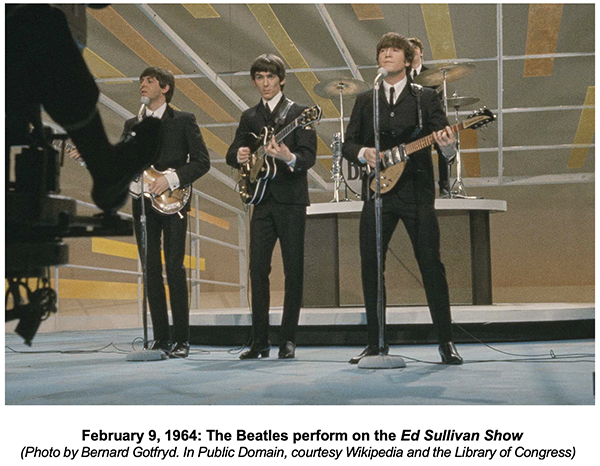
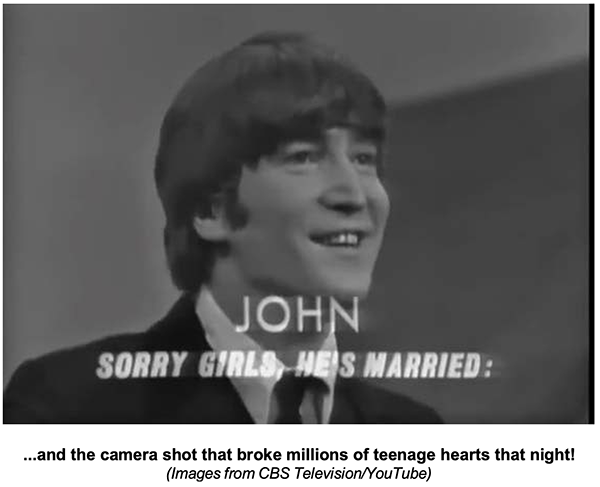
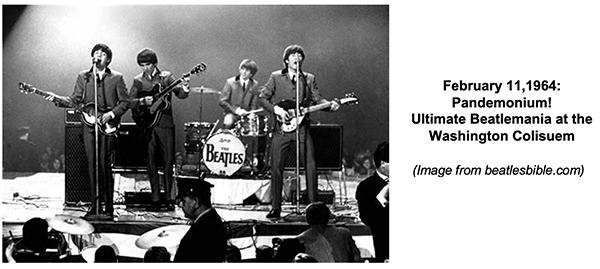
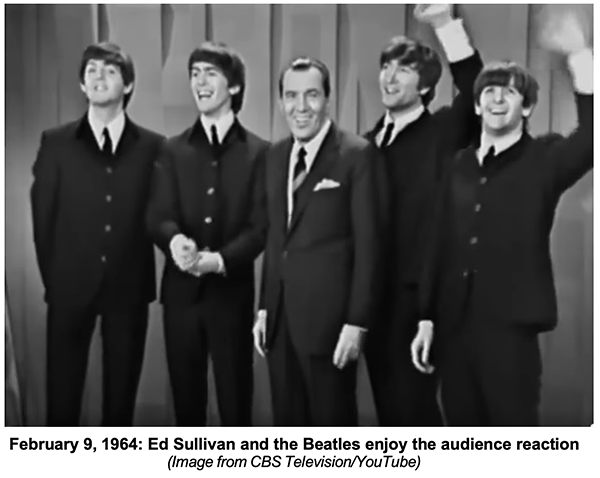
 In early December 1963, America was a very gloomy place. The assassination of President John F. Kennedy on November 22 brought the country to a virtual standstill for four days, and the emotional and psychological hangover lingered for weeks. The nation needed a dose of uplifting energy and fun, and the Beatles were the ideal remedy.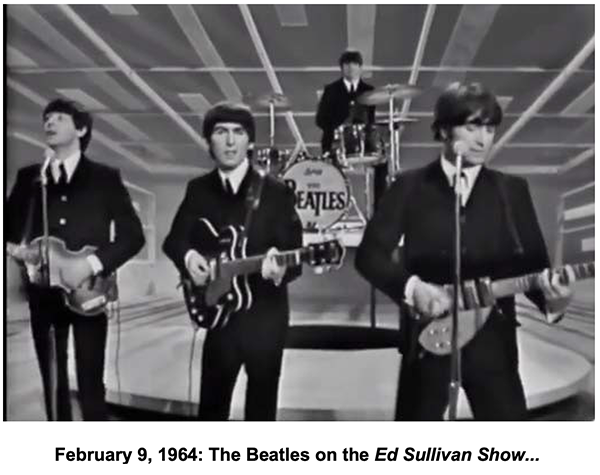
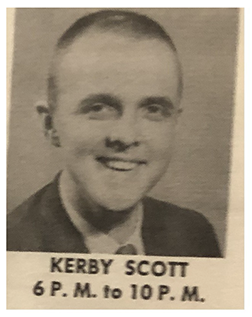 1964 WCAO Promotional Material: “Kerby Scott photo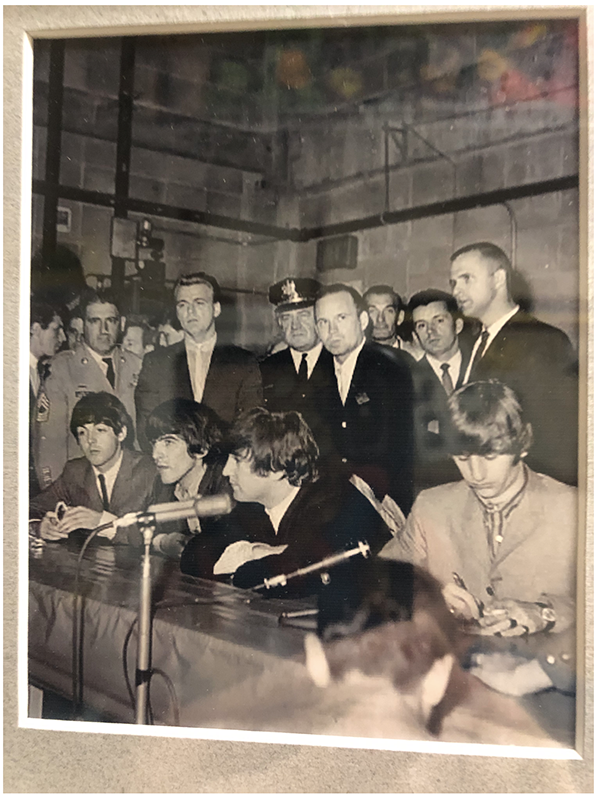
 Despite his seemingly nonchalant, bad boy on-air persona, David Letterman is exceptionally respectful of broadcasting and its history.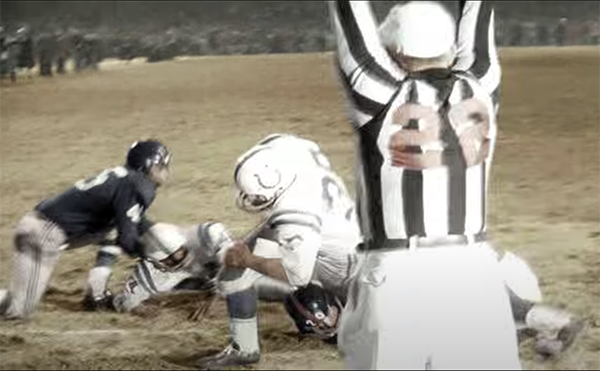
 It was one of those indelible moments in sports history: The 1958 NFL Championship, played on December 28, 1958 at Yankee Stadium in New York. The Baltimore Colts defeated the New York Giants 23-17 in sudden death overtime. 65 years later, the events of that Sunday afternoon still resonate throughout pro sports and sports media.
 LOS ANGELES – As students, enthusiasts and caretakers of this wonderful medium, we’re keenly aware that radio’s “Golden Age” boasted an incredible array of entertainers and broadcasters.
 We have a saying around “The Mark Kaye Show” studio:
 Folks in the Gen Z and millennial demographics are heavily
  College radio is a special place on the FM dial. Listeners know it as the channel at the low end of the band where student and volunteer DJs have free reign to play music not usually heard from commercial operators. College students recognize it as a place where they can hone their broadcasting skills and put their passion and talents to work to prepare for a career in the industry. Hiring managers recognize it as a proving ground that provides quality pre-professional development and a destination to seek out qualified candidates to fill entry level media industry roles.
 The History Channel calls it “The Most Dramatic Home Run in World Series History.” ESPN has often described it as the greatest home run of all time. To this day, it is the only World Series Game 7 walk-off home run.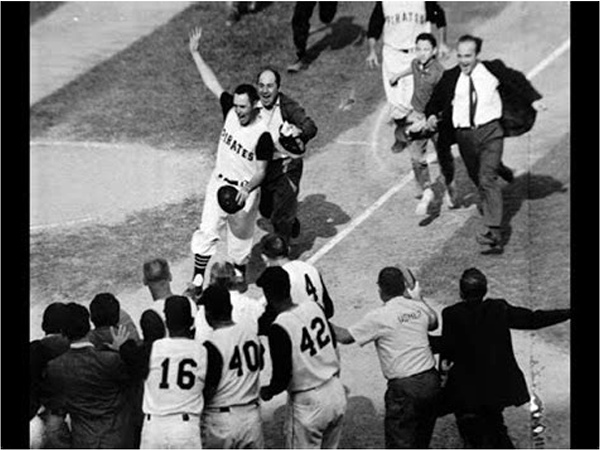
 Consider the following song titles:
 When television spiraled into a circus of chair-throwing, hair-pulling, fist-fighting, profanity-yelling, cross-dressing, sex-addicted guests, Jerry Springer was the ultimate ringleader. “The Jerry Springer Show” was so over-the-top when it debuted in September 1991 that security guards stood by on set and the opening featured a parental warning that stated the content may be inappropriate for children. With segments like “Sex Between Family Members” or “Nudists Talk About Why They Expose All,” it gained a reputation for being the most sexually-explicit tabloid program.
 Notwithstanding the enormity of accomplishments that enveloped this exceptionally bright and learned broadcaster, Jerry Springer remained as humble and refreshingly an “ah shucks” individual as you’ll ever hope to meet.
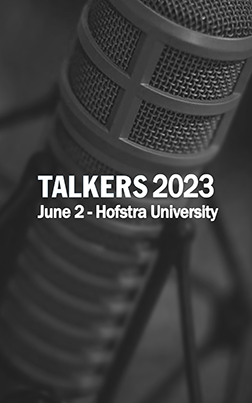 Hofstra – the site of our very successful 2022, 2021 and 2016 events – and enjoy the remarkable resources that its Lawrence Herbert School of Communication brings to the table.” As was the case last year, this event will be held in a COVID-19 compliant environment based upon the circumstances at the time of the convention. TALKERS 2023 will boldly address key issues – some existential – facing the talk radio and talk media industries at this dramatically critical juncture of rapidly accelerating technological and societal change as well as identifying the remarkable opportunities inherent in these developments. It will also provide participants with unique and powerful networking opportunities.
 January 2023 PPM Data – Information for the January 2023 survey period has been released for Austin, Raleigh, Indianapolis, Milwaukee, Nashville, Providence, Norfolk, Jacksonville, West Palm Beach, Greensboro, Memphis, and Hartford.
 January 2023 PPM Data – Information for the January 2023 ratings period has been released for New York; Los Angeles; Chicago; San Francisco; Dallas; Houston; Atlanta; Philadelphia; Nassau-Suffolk (Long Island); Riverside-San Bernardino-Ontario; San Jose; and Middlesex-Somerset-Union.
 grateful for the support Newsmax is receiving from radio hosts, wanted to speak out directly to the medium further explaining his position. (NOTE: Newsmax also has a footprint in the news/talk radio space as syndicator of the daily Rob Carson midday program.)
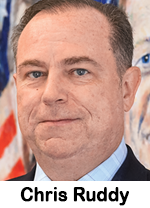 “We know from ‘The Twitter Files,’ that Twitter worked in collusion with federal agencies, including the FBI, to censor and restrict the speech of news media and public figures,” said Ruddy.